
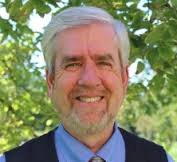
Steve Warner, founder long-time director of the Notre Dame Folk Choir, has accepted a new position in liturgical formation with the Archdiocese of Dublin, as Pray Tell reported. Pray Tell’s Anthony Ruff recently visited with Steve about the transition.
PT: Nearly four decades with Notre Dame Folk Choir – how does it feel to say goodbye to that?
 SW: It has been said – once by me at an NPM keynote – that our hearts are broken open so that they can hold all the more. The good-bye to the Folk Choir took place on Thursday evening, June 2, in Rostrevor, Northern Ireland. We had just performed the final concert of our Ireland/Northern Ireland/Scotland pilgrimage, having been introduced and welcomed by former Irish President Mary McAleese. It was a stunning concert, but all the while, I was torn up inside, knowing that following the concert the news was to be shared. Truly, my heart is broken for saying good-bye to this ministry and these marvelous Notre Dame students. But this brokenness does not lead to despair – it leads to the ability to hold even more.
PT: As you look back on it all, what are the high points?
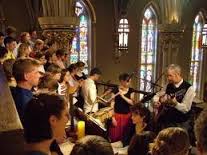
SW: Perhaps most memorable: more than twenty years of singing on Mother’s Day at a maximum security prison in northern Indiana (and receiving a blessing from the offenders at the end of our concerts); sharing the stage with a few other choirs for World Youth Day in 1993; being greeted at the end of an Sunday evening Easter Mass (the “student liturgy”) by Father Ted Hesburgh, who told me “…you helped to shape the spiritual landscape of Notre Dame.”
Big moments are easy to regard. It is the small moments where the miracles take place: a student that decides to do a year of service, a young adult who discovers their calling and identity and begins to share that discovery with others. High points, in my mind, are the small miracles: so small that they can be hidden in the bushes.
PT: What’s one musical moment you’ll always treasure?
SW: It was when I was standing in the vestibule of the Basilica of the Sacred Heart with my soon-to-be wife, surrounded by my family. The Folk Choir was singing “Rosa Mystica” in the loft as the final prelude. Michele took my hand, and whispered the final words set to music by Trappist Father Chrysogonus Waddell: “Transeamus.” “Let us go forth.”
 PT: How have you changed or grown during your time with the choir?
SW: Everyone is on a spiritual journey, so it’s safe to say that where I am now, musically and spiritually, is very different than where I was in 1980. But there are some things that remain the same: the search for music that reflects the noble simplicity of the liturgy; the courage to move beyond genre wars and allow a choir to embrace any style that brings integrity and conversion of heart to liturgical prayer; the constant encouragement to give people permission to enter into their prayer with full, conscious, and active participation. These are all things I’ve held from the start, and if anything, I’ve become more dedicated to them and resolved to uphold them with the passing of time.
PT: How have young people changed during your years of work with them?
SW: Young people are, in many ways, more dynamic, and yet even more vulnerable, than they were two generations ago. Look at what you now hold in your pocket: a small device that can bring you facts and information from all over the world! Social media that connects people in an instant – without the time or grace to process anything. It’s instantaneous, and because of that, very, very dangerous. Every year (at least at Notre Dame) we’ve talked about the “best and the brightest.” But where does that trajectory end, by way of the expectations we place on the shoulders of these teenagers? All the more, as I’ve been at the helm of the Folk Choir, I realize that my work is just as much about mentoring as it is about music.
 PT: Anything you’d do differently if you had to do it over again?
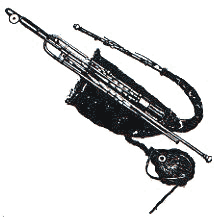
SW: I’d learn how to play the Uilleann pipes. Maybe I’ll do that when I move to Dublin.
PT: How did this position in Dublin come about and how did you come to accept it? Is it a new position?
SW: My love of Ireland, of Irish music, and of Irish spirituality, is no news to those who know me well. And for years, I’ve been outspoken about what my University’s response should be to a Church that I believe is in triage. Some of my composer friends have observed that the Irish church is, in fact, a “perfect storm” – a glaring lack of liturgical resources, little investment in lay ministry, the predictable evaporation of vocations, a culture that became breathtakingly wealthy in a short amount of time, all wrapped up in an embarrassing scandal. So to be given the chance to work in that needful environment, especially after all that has been given me over the years, is something that I find compelling.
PT: When do you begin?
SW: September 1st, 2016.
PT: So, liturgical formation in Ireland – I’m sure you’ve heard all the jokes about Irish liturgy. What do you think the situation calls for, and what do you hope to bring to it?
SW: There is a memorable line from the Confessions of Saint Patrick, where the young man, standing on the shore and looking toward Eire, hears the people calling out “Come and walk among us again.” I think it would be a tragic error to head to Ireland with an articulated game plan. I have plenty of education and experience, and lots of repertoire up my sleeve. But all of this means nothing until I walk with the people, share stories with them, get to know them. Ask me in a year what I hope to do. I’ll tell you then.
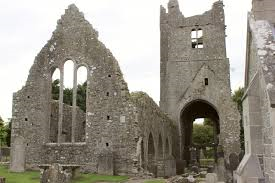 PT: Some say the Catholic Church is collapsing – see the recent Boston College Magazine article. What makes you want to work in this rocky ground?
SW: After traveling there for the past 30 years, I know all too well many of the interior problems of the Catholic Church in Ireland. But I would ask anyone who’s reading this: if you knew of a place that was suffering, would you not want to lend a hand? I have been afforded the opportunity to do so. Every Dismissal Rite of the liturgy encourages me to do so. And likewise, most of the lyrics of the songs I sing and teach to my students have compelled me to do so. So how can I ignore this call?
PT: Tell us about your new job and the work you’ll be doing. Will there be a new Folk Choir?
SW: One of my specific job descriptions is to encourage young adults to come back to the faith in Dublin. That is no small task. There is a lot of baggage in regards to the Catholic Church, particularly in that fair city, where secularism is rampant. But I hold in common some things that have been said publically by Jerry Galipeau, one of my closest friends: People still need to sing, they still need to pray. Add to that: people still need to share their stories, they still need to grieve, they still need to make sense out of a sometimes brutal world. And they still need grace and beauty in their lives. I hope, through my labors, to give people permission to be spiritual through the gift of music in the liturgy. Yes, I hope there’s a choir to be formed. It will never be the Folk Choir – but maybe something new, something that will reflect the landscape of Dublin.
Please leave a reply.