Author: Other Voices
-

Brief Book Review: Just Church
AMANDA C. OSHEIM — “Zagano asks the important question of how Catholic social teaching (CST) applies not only ‘beyond’ the church, but also within the church. ”
-
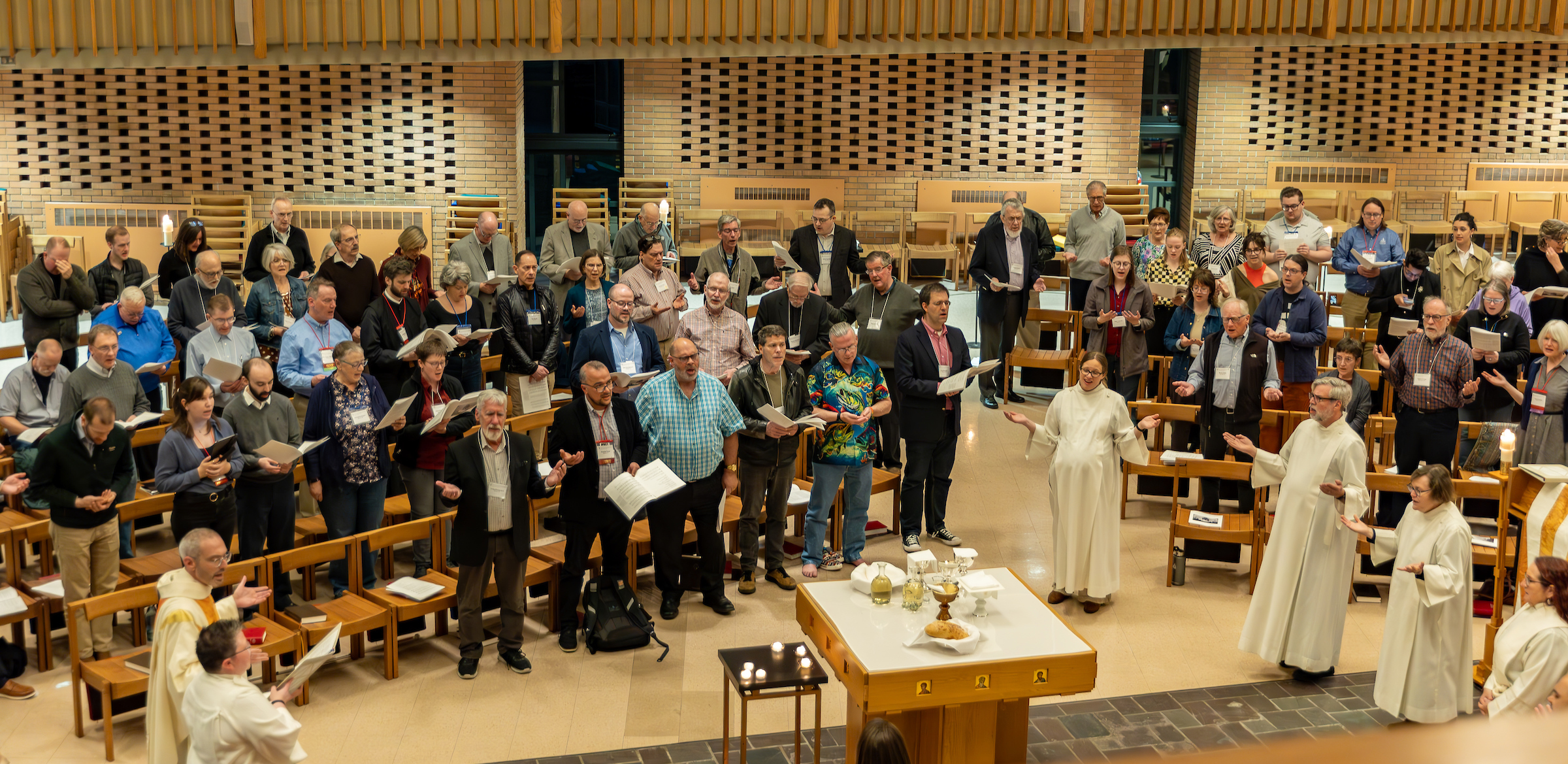
Institute of Liturgical Studies at 75!
OMALDO PEREZ — The Institute’s robust fusion of theory and praxis, and its rich intellectual buffet, is what attendees have come to expect and look forward to every year.
-

Ars Praedicandi: Twelfth Sunday in Ordinary Time
ED FOLEY — Our baptismal commission is not simply to rebuke the turbulence that affects our family and friends and community but to recognize that there are other boats in this storm and to stand up for stillness and peace for all.
-

Brief Book Review: Passions of the Soul
MICHAEL PLEKON — “What follows is not at all a “how to do it” course, the sharing of particular practices for moving toward freedom. Rather Williams takes us to the traditional list of the passions that enslave us and from which we need to detach, literally become apathetic–letting go of the pathos in each.”
-

Corita Kent: “Loud and Clear” (Ritual) Artists Amid Adversity and Uncertainty
REBECCA BERRU-DAVIS — “What the world expects of Christians is that Christians should speak out and that they should voice their condemnation in such a way that never a doubt, never the slightest doubt, could rise…”
-

Ars Praedicandi: Trinity Sunday
ED FOLEY — My poetic muse for this morning is not Crosby Stills Nash and Young, nor Hegel, Kant or some other philosopher, but instead the theory of the Big Bang.
-

Ars Praedicandi: Fifth Sunday of Easter
ED FOLEY — “I did not hang around the Riesling vineyard to observe the pruning done in early spring, but my Dummkopf corrector turned mentor explained the importance of pruning for the health of a vineyard.”
-
Ars Praedicandi: Easter Sunday, Ed Foley
ED FOLEY — “Today’s Eucharist is not an exercise in neural- but in Jesus-feedback that summons us to embrace the ‘Jesus virus’ to recalibrate us for practicing resurrection in a world too often hell-bent on crucifixion.”
-

Brief Book Review: Tilling the Church
DAVID STOSUR — “On the heels of the devastating clergy sexual abuse crisis and the COVID-19 pandemic in the Catholic Church, Lennan provides a hopeful but also realistic image of “tilling” the church, as one would till the earth to promote ongoing growth and renewed life.”