
By Fr. Marco Benini, July 31, 2026
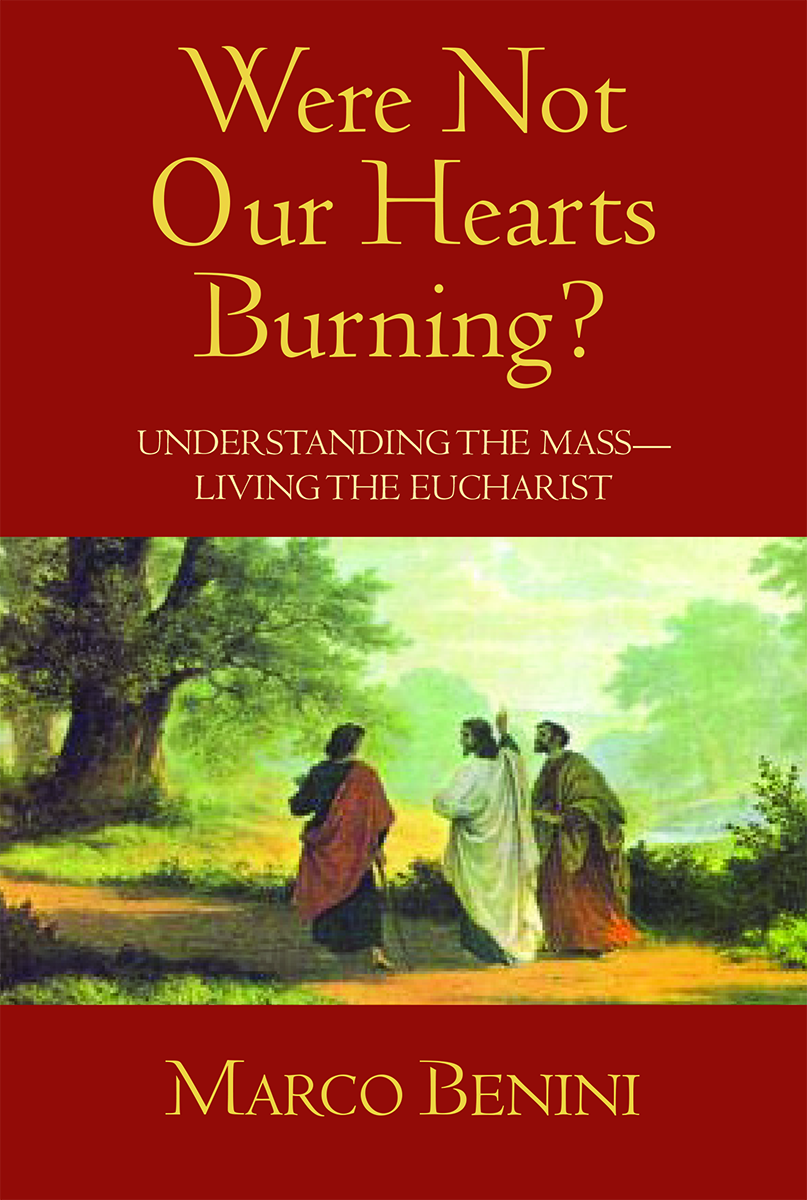
In this weekly series, Fr. Benini invites the reader to join him in a prayerful exploration of Eucharistic celebration as a daily encounter with Christ. Used with permission of Paulist Press, www.paulistpress.com.
IN THE LIGHT OF YOUR FACE
When someone is happy and full of joy, their face shines. There is a light in their eyes. Newborn babies can see things that are about eight to twelve inches away, so they can recognize their parents’ faces. For babies, the gleam in their mother’s and father’s eyes is a loving affirmation and a yes to life.
The psalms apply this image to God’s people who walk in God’s ways, the people “who walk in the radiance of your face, Lord. In your name they sing joyfully all the day; they rejoice in your righteousness” (Ps 89:16–17).
This is what we ask for in Eucharistic Prayer II for our deceased: “welcome them into the light of your face.” We also ask the same for ourselves. Eternal life is not primarily a statement of time, but a statement of relationship and quality: “life in abundance” (see John 10:10) in the presence of God, in personal and loving union with God and all the saints, in a feast of eternal joy.
The Mass, as the celebration of Christ’s death and resurrection, is a fitting place to remember the deceased, especially as it is the anticipation of the eternal wedding feast. We are also united with the deceased at the Lord’s Table, be it that we pray for them to be fully received by God, or that they intercede for us before God. Even St. Monica, on her deathbed, asked her son Augustine to remember her at the altar. Since the fourth century, the names of the deceased and the living have been mentioned in the Eucharistic Prayer. Even today, Eucharistic Prayer I offers the option to name the deceased, which has led to the naming of the deceased in the other Eucharistic Prayers as well. The general intercessions are another place for this. In the Requiem Mass, the deceased are always remembered by name, and we pray that God might give them and us “kind admittance to your kingdom. There we hope to enjoy forever the fullness of your glory, when you will wipe away every tear from our eyes. For seeing you, our God, as you are, we shall be like you for all the ages and praise you without end.”
Those who make Mass intentions for the deceased or also for the living—for example, for a wedding anniversary—should, if possible, attend the celebration themselves (with their family). However, even if we remember specific people, the Mass is always for everyone.
From: Marco Benini, Were Not Our Hearts Burning? Understanding the Mass – Living the Eucharist, Paulist Press: New York / Mahwah, NJ, 2026, p. 66 f.
Marco Benini is ordinary professor of liturgical studies at the German Liturgical Institute in Trier and research professor at The Catholic University of America.
Please leave a reply.