
By Fr. Marco Benini, July 3, 2026
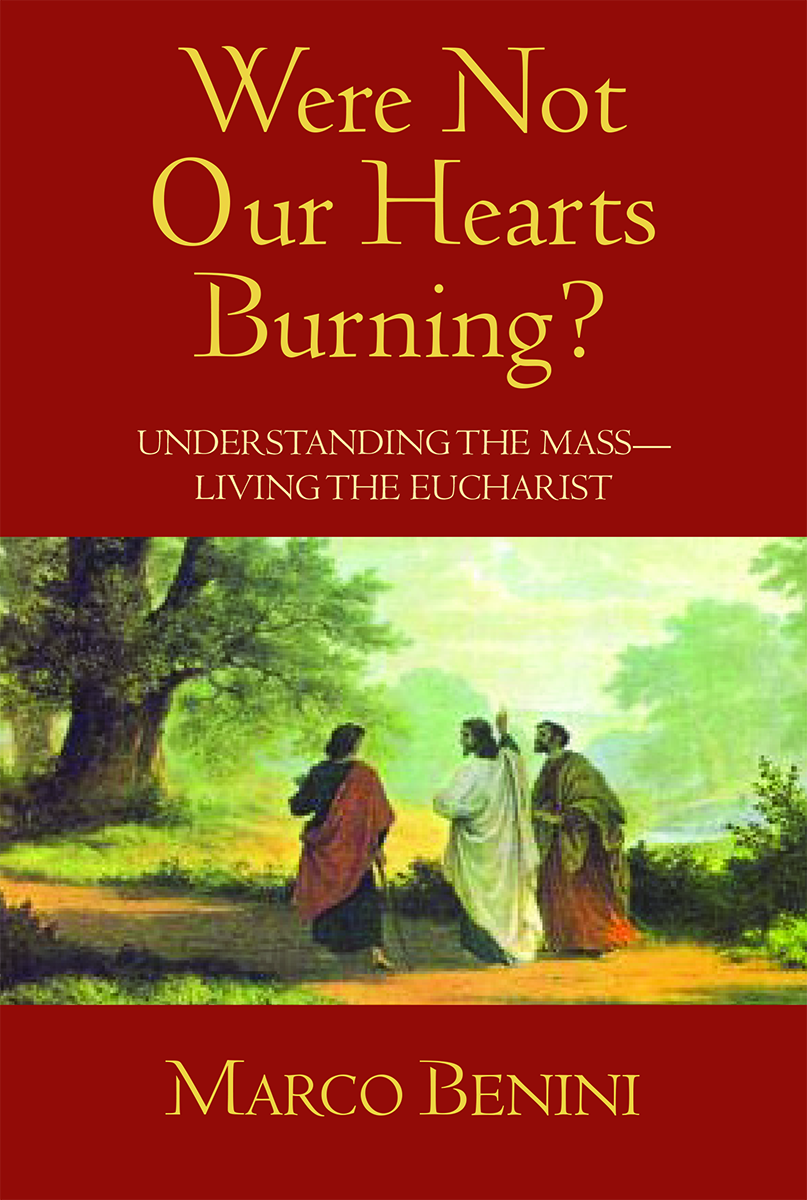
In this weekly series, Fr. Benini invites the reader to join him in a prayerful exploration of Eucharistic celebration as a daily encounter with Christ. Used with permission of Paulist Press, www.paulistpress.com.
PLACING YOURSELF IN THE PATEN
The preparation of the gifts is more than just a transition between the Liturgy of the Word and the Eucharist. Its history can explain its special significance. Originally, people brought bread and wine and other gifts for the needy from home. We learn from St. Augustine that his mother Monica actually brought an offering to the altar every day. In the papal liturgy of around 700, there was an elaborate rite of offering: the pope went first to the senators on one side, then to the noble ladies on the other, and so on, receiving their gifts. It must have been an elaborate and lengthy process because everyone brought something. In the Middle Ages, this was replaced by collecting money to bring something of one’s own to the altar (hence the baskets placed nearby). In Africa today, in addition to bread and wine, a variety of everyday gifts are brought to the altar.
The point is to bring one’s own life into the Eucharist. This is the deeper meaning of the preparation of the gifts. In some parishes it is customary to place a host in the paten at the entrance. It is a ritual way of expressing that everyone brings their own offering. At a group Mass, I once set a different accent: each person took the paten with a large host in their hand for a while and was allowed to silently “place in the paten” thanksgiving and petitions, people close to their hearts, or whatever they wanted to bring to the Lord. Then, as the priest, I took the paten and placed it on the altar with all our prayers, yes, with ourselves. It was an intense celebration!
Beyond the outward form, it is the attitude with which we ourselves participate in the offering that counts: I offer to God what I am and what I have. The Holy Mass has to do with my life, with its ups and downs. As it is, it can go to God so that he can transform me. I myself am a part of the Eucharist, and therefore it is necessary for me to give myself to the celebration in which God also gives himself for us.
From: Marco Benini, Were Not Our Hearts Burning? Understanding the Mass – Living the Eucharist, Paulist Press: New York / Mahwah, NJ, 2026, p. 47 f.
Marco Benini is ordinary professor of liturgical studies at the German Liturgical Institute in Trier and research professor at The Catholic University of America.
Please leave a reply.