
By Fr. Marco Benini, June 5, 2026
In this weekly series, Fr. Benini invites the reader to join him in a prayerful exploration of Eucharistic celebration as a daily encounter with Christ. Used with permission of Paulist Press, www.paulistpress.com.
The Mass does not begin with the entrance of the priest and the liturgical ministers. It begins at home, with the longing call of God and with the fact that we set out on our journey. The disciples of Emmaus already show the latter: On the day of Jesus’s resurrection, Luke describes a kind of “original narrative” of the Sunday Mass with the Liturgy of the Word (the journey) and the celebration of the Eucharist (the breaking of bread in the house). At the beginning, Luke writes about the two disciples: “They were conversing about all the things that had occurred” (24:14). Even before Jesus joins them, they begin to talk about what they have experienced over the last few days.
This means that the Mass begins at home: What do we, what do I take with me to the liturgy? What has happened in my life this past week, at home, at work? What is on my mind? What burdens me? Where do I need God’s healing mercy? What do I want to be strengthened for in the coming week? If joyful or worrying thoughts and feelings about your partner, children, job, news, and society accompany you during Mass, you do not need to push them away as a disturbance or lack of devotion. Rather, you can hold them up to God or place them before him, confront them with the word of God, take them into prayer (for example, during the intercessions), place them on the altar and let them be transformed, even blessed.
Of course, it is “right and just” to collect oneself and concentrate on the liturgy. It is helpful to realize that we are about to meet God. Perhaps you can look at the readings at home (online[1]).
However, entering the sacred space in the liturgy does not mean separating the world from God. As we know, God did just the opposite in the incarnation in order to redeem us. The Eucharist and life form a cycle: from daily life into the Eucharist and then from the Eucharist into life, so that we live the Eucharist.
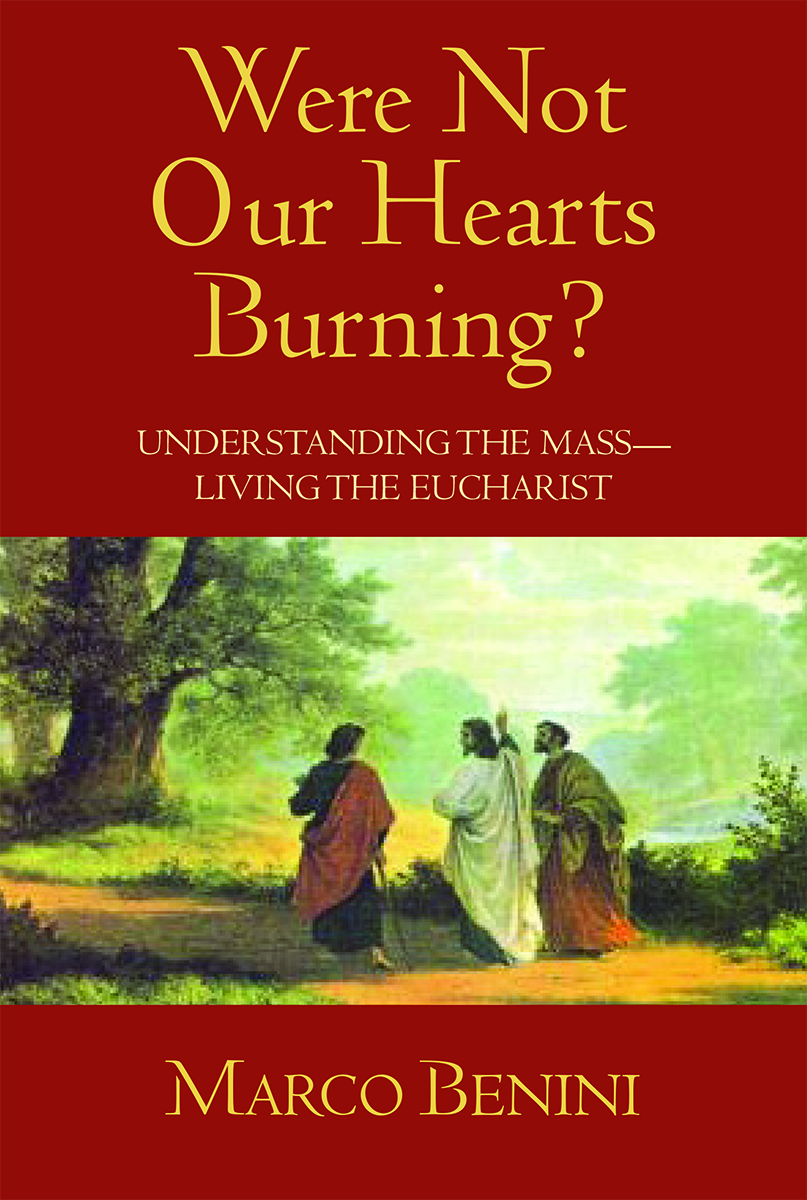
From: Marco Benini, Were Not Our Hearts Burning? Understanding the Mass – Living the Eucharist, Paulist Press: New York / Mahwah, NJ, 2026, p. 10 f.
[1] See https://bible.usccb.org/daily-bible-reading.
Marco Benini is ordinary professor of liturgical studies at the German Liturgical Institute in Trier and research professor at The Catholic University of America.
Please leave a reply.