
Perhaps one of the most significant ecumenical and liturgical moments since the end of the Second Vatican Council is unfolding quietly across the globe. An ecumenical process “having legs” began in March 2024 in Assisi Italy. At that time pastoral practitioners, environmentalists, scholars and church leaders discussed the possibility that the so-called “Creation Day”, celebrated by many churches in the past decades, could become a universal liturgical feast – and even a liturgical season.
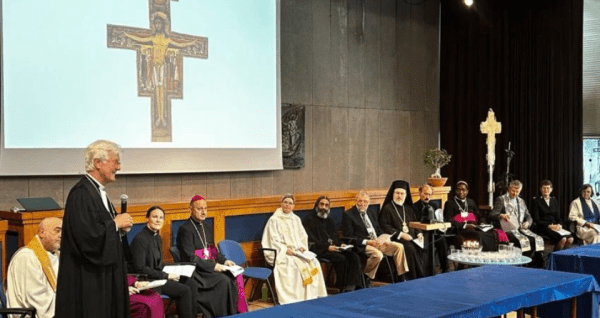
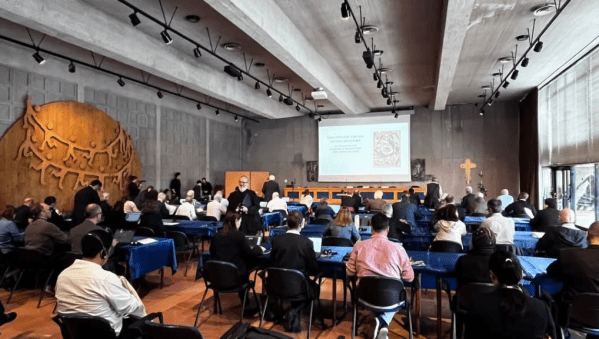
Recently a follow up conference took place in Assisi from 5-7 May 2025 entitled Creation Day & the Nicaea Centenary: Crystallizing the Ecumenical Dream of the New Liturgical Feast. Once again scholars and religious leaders world-wide gathered in Assisi and online with the specific purpose of coming to ecumenical consensus around a feast; its theology, title, liturgical texts, and place in the calendar. Ecumenical participation was extremely broad. Religious bodies participating included the Anglican Communion, Lutheran World Federation, World Communion of Reformed Churches, World Methodist Council, World Council of Churches, Baptist World Alliance, Coptic Orthodox Church, Ecumenical Patriarchate of Constantinople, Middle East Council of Churches, Pentecostal World Fellowship, Mennonite World Conference, World Evangelical Alliance, Disciples of Christ, Moravian Church and Salvation Army. The global majority of Roman Catholics were represented by the General Secretaries of the Symposium of Episcopal Conferences of Africa and Madagascar (SECAM), the Episcopal Conferences of Latin America and the Caribbean (CELAM), and the Federation of Asian Bishops’ Conferences (FABC).
The theology of the feast
There was broad agreement that the development of any feast must be grounded upon a liturgical and theological rationale rather than an eco-justice agenda. An early clarifying intervention was offered by Rev. Dr. Elizabeth Smith on behalf of the Anglican Communion. She emphasised that any feast must be a celebration of God as creator, in whatever trinitarian, pneumatological, or Christological focus it will be described. All agreed that what was under consideration was not a celebration of creation, but praise of God’s providential action in the cosmos, and humanity’s response of adoration of the creator and corresponding ethical obligations before the gift of creation in light of the ecological apocalypse of our time. Another essential intervention came from Rev. Dr. Frank Senn (Garett-Evangelical) regarding the need to maintain a Christological focus within the feast in relation to the broader liturgical year.
Lectionary choices and prayer texts
The Consultation on Common Text, invited to participate in the project previously, provided a schema of lectionary readings for inclusion in the Revised Common Lectionary for a feast celebrating God as creator. A summation of the working hermeneutic of biblical text selection was presented to those gathered broadly based upon the dynamic of ‘creation, deconstruction, consummation’.
A three year reading cycle was proposed which reflected upon the natural world, but also the redemption of human situations, especially those that referenced humanity and the natural environment, such as Jesus’ calming of the sea in Matthew 8. Some participants expressed unease regarding the incorporation of the concept of un-creation / destruction / deconstruction being used as a hermeneutical principle in text selection.
Rev. Dr. James Hadley (this writer) questioned if readings from similar feasts, or previous lectionary traditions, had been consulted in shaping the CCT suggestions. They had not. The inclusion of the readings from the Orthodox Feast of the Indiction (September 1) celebrated for some 1700 years, and upon which the inspiration for a shared feast was drawn, would seem like an obvious core of biblical texts from which to begin building out. Conversations regarding prayer texts considered models of Eucharistic prayers as well as other elements of Eucharistic praying. Participants acknowledged that the broad range of liturgical/worship traditions present likely means having a shared feast day but various approaches to the composition of liturgical prayers. Whether liturgically oriented churches, or liturgical families, involved in the consultation can agree on a core of common prayer texts for the feast is yet to be seen.
The calendar
Consensus regarding the date of the feast began emerging. In 1989 Patriarch Demetrios I proclaimed September 1 as the Orthodox Day of Prayer for Creation. The WCC extended the time of observance until October 4, the feast day of St Francis of Assisi. In 2015 Pope Francis made the Season of Creation official for the Roman Catholic Church. At Assisi the majority of participants generally agreed that any liturgical feast should take place on the Sunday following September 1 to keep the Dominical focus of the calendar. Moreover, there was almost complete unanimity that the entire Season of Creation, already recognised and celebrated by so many churches globally, should be given a liturgical character, recognising the depth of theological reflection and pastoral formation the core feast offers. Numerous scholars suggested that the only way to do justice to the theological foundations of the creator/creation theme, and the pastoral/ethical dimensions it offers, would be to ‘extend’ the feast. Doing so foresees subsequent liturgies taking on various nuances drawn from the initial Sunday celebration.
Theological foundations
As would be expected, but unfortunately placed towards the end of the conference, a number of papers addressed the theological underpinnings of creation-care and the proposed feast. Presentations focused upon the Nicene understanding of God as creator, creation as the Trinitarian outworking of love, creation and redemption as the work of the Logos, and the sacramentality of creation as a conduit of grace and reflection of God. Placing these conversations at the outset of the conference would have perhaps given helpful direction to discussions regarding the nature of the feast and proposed titles, as well as informing theological criteria for selecting biblical passages and composing liturgical prayers.
Some Reflections
Those responsible for organising this second conference and shepherding the churches towards a shared global ecumenical feast are to be congratulated and esteemed for their important work on behalf of Christ’s church. The ecumenical unity and global participation on display were nothing short of amazing, and perhaps even miraculous. I, certainly, have never experienced a conference/gathering of such unity of vision and purpose. The use of technology to bind the world together was sophisticated and essentially seamless. Gathering during the days of mourning for Pope Francis, there were clear signs that his gifts of Laudato Si’, and Frattelli Tutti to the Church are bearing fruit.
Often during the conference I had the sense that what was happening must be akin to the heady days of the liturgical reform and ecumenical movement of the past century. I felt it was the first time I have ever experienced ‘unity in diversity’ in some tangible, realistic, and believable way. Participants accepted that different traditions might need different words – but that was expected and ok – especially if we hold to the premise that unity does not mean uniformity. Indeed Dr. Kimberly Belcher reflected upon the groundbreaking nature of the moment suggesting that unlike the past where “Christians have said the same words but meant different things, this is one of the first times that we are saying different words, but meaning the same thing”. This is no small feat, evidencing the ‘onemindedness’ of the Body of Christ in this historical moment.
I do think the proposed lectionary cycle and liturgical prayers, the latter which exist only in the scarcest of outline at this moment, need further consideration and refinement. What was clear in the biblical and theological reflections presented at Assisi was the centrality of ‘logos theology’ in relation to creation. Yet this essential theological grounding is not yet fully developed in the liturgical texts being explored.
The Orthodox Feast of the Indiction in fact appoints as the Gospel reading Luke 4:14-20. The pre-existent Word “through whom all things were created”, appears in flesh, as the fulfillment of God’s creating work. There is much in this reading to be unpacked as the beginning of a Season of Creation.
It also seems to me that there needs to be broader consultation across traditions and geography in this respect, especially beyond a North American view of the world and theology.
Admittedly, there is some nervousness about what a Season of Creation could mean for the integrity of the Western liturgical calendar. Does it feel incongruous thematically from the flow of the current calendar? Perhaps it is helpful to remind ourselves that the Western liturgical calendar never had such a linear logic as it has taken on since the reforms of Vatican II. Imaginably the mystery of salvation is more complex than the mapping out of the life-cycle of Jesus in our yearly worship. Surely it is something notable that the Orthodox liturgical year begins on September 1, not Advent. And as I suggested at Assisi, the almost magnetic pole of beginning/end in the Western calendar abutting the Feast of Christ the King and Advent is a modern development. Christ the King began as an anti-fascist, anti-war feast, which then migrated to the ‘end’ of the liturgical year and there took on new meaning. Indeed, the European medieval liturgical calendar often marked Michaelmas as the beginning of the church’s year, and on numerous calendars counted Sundays before and after without great affair. I would suggest incorporating a ‘new’ Season of Creation in the Christian calendar would add a different tenor to the months of September and October, but nothing that is not already present in the tradition, and nothing that would distort the calendar beyond recognition. Indeed, there is no one ‘correct’ calendar, just as there is no ‘finished’ calendar. To my mind there is something suggestive in contextualizing a feast of the Creator God, the Triumph of the Cross, and the commemoration of St Francis in an overarching season.
Surely no liturgical reform or modification is ever perfect. Many are timely – but shift over time – losing meaning, focus, or effect. Undoubtedly, knitting together a global consensus around a feast day and calendar modification is an enormous project. But coming away from the conference I was convinced the churches should not let the perfect become the enemy of the possible.
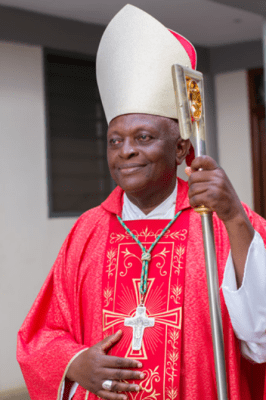
Two conversations sealed the deal for me. Speaking to the General Secretary of SECAM, Bishop Joseph Afrihah-Agyekum (notably with a doctorate in liturgy from Sant’Anselmo), I asked if African RC bishops would be positively disposed to the development, or would it be read as potentially too anamistic, too new-agey. The bishop responded saying “No. We are ready.” He reflected that in Ghana, his home, illegal strip mining of river beds supported by American interests is destroying the ecosystem of the country.
As a result Ghana is now compelled to build water purification infrastructure and import massive chemical supplies to clean water that once was drinkable. “The future is here, and it is not going away”, he said. A conversation with Bishop Felix Al Shabi of Iraq was even more concise. “We are disappearing,” he told me, “lost between Afghanistan, Yemen, Iran, and Syria.” “The destruction brought to us by wars, also destroyed the environment and our culture. We are losing our home. The church must help recall us to our senses,” he concluded.
At Asissi there was the clear feeling that God’s Spirit is at work. The gift of the ministry of Patriarch Bartholomew and Pope Francis is taking root, and maturing in the churches. There is too much consensus, goodwill, and participation, to deny that something is happening. Moving forward, there is hope that a concrete proposal regarding the feast and season can be presented to the Ecumenical Patriarch when Christian leaders meet in Nicea at the end of this November to commemorate the 1,700th anniversary of the First Ecumenical Council. There is also trust that Pope Leo will take up the environmental legacy of his predecessor. The General Secretary of CELAM, Mons. Lizardo Estrada Herrera, participating online at the Assisi conference, is himself an Augustinian and close collaborator with Pope Leo.
I am hopeful that the churches, cognizant of the signs of the time and in the face of the environmental and human crisis underway, will put to use the liturgical riches and pastoral wisdom of 2000 plus years of Christianity to speak into one of the greatest challenges of our time.