
Still far from You
Last week’s choir practice began for me not so much Advent-like but rather in a period of stress. But the first hymn text I took hold of in my hands already touched me. Word for word, it draws me in, connecting its experience with mine: “I look from afar” – this is how the responsory, set to music by Jacobus Gallus for a mixed choir hit me on the morning of the first Sunday of Advent.[1] Who, me? Yes, I myself sing these words and look out for “… more than watchmen for the morning” comes to mind spontaneously, although that is not in the text (but in Ps 130:6), and suddenly I feel the urgent need for light, warmth, goodness. A longe – I too can place my yearning in the ascending interval of the “longing sixth”, because I am still looking “from afar”… But the music leads me further – and lo, I see the power of God coming, and a cloud covering the whole earth. The text promises grandeur and energy. I can decide whether I want to indulge my need for security or first look up at the “mighty one”…
Destroy the covering that is cast over me and over all peoples
Then there are the mists – is it the cloud that indicates God’s presence? It rather seems misty to me, gray in gray like during a monotonous car journey I recently experienced. The mists are a symbol of human existence. Just a few days ago, on All Souls’ Day, we sang “Just as a mist quickly develops and also quickly fades away again, so is our life – see!” (Bach-Cantata “Ach, wie flüchtig, ach wie nichtig” BWV 26). But here it is different: A cloud covering the whole earth – not fleeting at all, but thick and heavy it lies over my life, over the lives of others, over the “whole earth.” But wasn’t there also the promise that at the end of time “the covering will be destroyed, the veil that is spread over all nations” (Isa 25:7)? Do I really want the blanket to be lifted? Sometimes it warms, sometimes it weighs down, but in any case it obscures the view …
…to judge the living and the dead
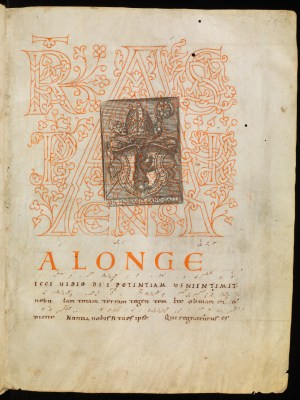
A few bars later, my train of thought is ended by the order: Go ye out to meet him. The familiar Advent text “Come out to meet him” (Matthew 25:6) immediately comes to mind, but it doesn’t fit. For the virgins in Matthew’s Gospel know that they are expecting the long-awaited bridegroom. But I am supposed to sing and ask: Tell us, art thou he that should come to reign over thy people Israel? (cf. Mt 2:6) How will I ask? Will I ask hesitantly like John, for whom everything was at stake, and who therefore sent his disciples to Jesus: “Are you he who is to come, or shall we look for another?” (Mt 11:3)? Or will I ask anxiously like all those whose power will come to an end under his rule? Or will I ask hopefully because he is coming to judge me and the world, set me and the earth aright?
Movements in Advent
These last words, “Tell us, art thou he that should come to reign?” are repeated three times in our setting, each time shortened a little: it goes blow for blow, we take turns singing and proclaiming to one another the lordship of the one who is coming. Encouragement and acceptance, word and answer are imprinted on our minds. – Last year at this time, the upward striving movement of the Introit for the first Sunday of Advent, “To thee, O Lord, I lift up my soul” (Ps 25:1), had accompanied the weeks in expectation of the one who is coming. This year I am learning the longing gaze from afar. And everything else I carry within me in the way of biblical words and liturgical experiences will, I hope, help me to understand him more and more deeply…
[1] Aspiciens a longe, ecce video Dei potentiam venientem, et nebulam totam terram tegentem. Ite obviam ei, et dicite: Nuntia nobis, si tu es ipse qui regnaturus es in populo Israel.
R I look from afar: and lo, I see the power of God coming, and a cloud covering the whole earth.
Go ye out to meet him and say: Tell us, art thou he that should come to reign over thy people Israel?
V High and low, rich and poor, one with another. †
V Hear, O thou shepherd of Israel, thou that leadest Joseph like a sheep. ‡
V Stir up thy strength, O Lord, and come. ††
V Glory be to the Father, and to the Son, and to the Holy Ghost. R