
This post continues the Obsculta Preaching Series, sponsored by the Obsculta Preaching Initiative at Saint John’s School of Theology and Seminary. In these posts, our authors engage a variety of ways in which scripture, preaching, and liturgical worship interact with the life of the faithful.
My most recent settings of Psalm 23 in some ways return to my earliest setting back in the 1960s, enriched (I hope) by my other attempts to set this text over the years.
Around 2020 I set myself a compositional project of setting all the Responsorial Psalms for the 3-year Sunday and Solemnity cycle of the Liturgical Year appearing in the English-language United States version of the Lectionary for Mass. I decided I should discipline myself to set the psalm antiphons as they appear (with slight modifications such as adding a vocative “O” on occasion or repeating particular phrases) in the present Lectionary for Mass.
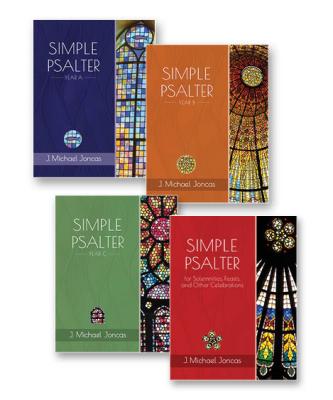
Similarly, I determined to set the psalm verses exactly as they appear in The Abbey Psalms and Canticles produced by Benedictine monks of Conception Abbey. (My understanding is that the United States bishops have committed themselves to use these translations in future editions of official Catholic liturgical books, including the Lectionary for Mass and the Liturgy of the Hours.) One of the antecedents of The Abbey Psalms and Canticles is the 1963 translation by the Ladies of the Grail, created in sprung rhythm that perfectly suits these texts to Joseph Gelineau’s pulsed psalm-tones. Happily, The Abbey Psalms and Canticles retains the value of pulsed/sprung rhythm in its translation. Entitled Simple Psalter and published in four volumes by The Liturgical Press, this project is now complete.
I gratefully acknowledge three composers’ work as being highly influential for my own project. Joseph Gelineau is the primary influence insofar as I have consciously shaped my own psalm-tones after his and yoked them to metrical antiphons under his influence. Unlike Gelineau, who notated his psalm-tones as whole notes over varying texts, trusting the cantor/schola to chant the texts in speech rhythm, I have notated all psalm verses in what I consider speech rhythm, having found that many cantors and scholas find Gelineau’s method of notation a daunting challenge.
A second influence was Howard Hughes, S.M., whose assigning of particular psalm-tones to particular genres (Gatungen) of psalms based in contemporary form-critical analysis has been eye- and ear-opening for me. My own yoking of psalm tones to particular genres is patterned after the analysis of my friend and colleague, Art Zannoni. The final influence comes from Paul Inwood, who taught me the difference between psalm-tones and psalm-tunes, a distinction that has allowed me to create antiphons applying the same underlying melodic curve to diverse texts.
Since I am conscious of the varying resources different worshiping communities bring to their music ministries, I have tried to make the scores as adaptable as I can. For example, I have provided two vocal harmony lines for the antiphons which could be sung by higher and/or lower voices or played instrumentally in appropriate tessituras to enrich the congregational singing of the antiphon which is usually in a mid-range tessitura. Of course they may always be sung and played by a single cantor and a single keyboardist with congregation singing the antiphons in most basic form.
Of the six occurrences of Psalm 23 in the Sunday and Solemnity Lectionary for Mass, five (4 Lent A; 4 Easter A; Christ the King A; 16 Sunday OT B; Sacred Heart C) employ the antiphon text “The Lord is my shepherd; there is nothing I shall want,” while 28 Sunday OT A uses “I shall live in the house of the Lord all the days of my life.”
Comparing my settings of these two antiphons demonstrates how a “psalm tune” may adorn very different texts. You’ll notice that the psalm verses are all assigned my Tone 6, intended for “Psalms of Confidence.” While Liturgical Press has recorded a few of these settings as “demos,” none of these recordings include Psalm 23. One could compare the scores for these two settings in pp. 178-181 and pp. 204-207 of Simple Psalter for Year A (Liturgical Press, Collegeville, MN: 2022).
I hope these few blog posts give a sense of how composers may take different factors into account as they prepare compositions for the Church’s worship, drawing from our Lectionary.
Please leave a reply.