
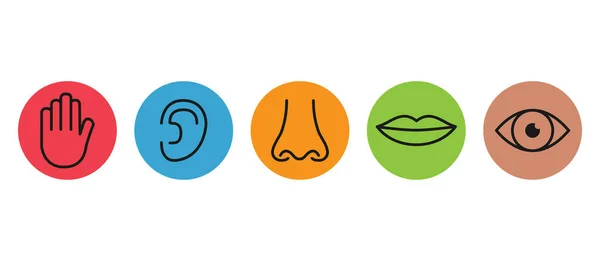
I am excited to announce a project I have been working: “Sensory Liturgy,” which focuses on the use of the five senses in the church’s liturgical celebrations.
The project is part of the Teacher-Scholar Grant (2024-2025) I received from the Calvin Institute for Christian Worship. This program is made possible through a Vital Worship, Vital Preaching Grant from the Calvin Institute of Christian Worship, Grand Rapids, Michigan, with funds provided by Lilly Endowment Inc. The grant has allowed me to take the time to work on the project, as well as given me the resources to dedicate to the various parts of the project.
The goal has been to make the project openly available. The first parts of the project that are already available are:
- A mystagogy and activity on Eucharistic bread
- A mystagogy and activity on Eucharistic wine
- A mystagogy and activity on Chrism
Other projects are forthcoming.
Some excerpts from the Project Description:
Project Origins
“Sensory Liturgy” as a project has been percolating in my mind since I was a graduate student at Saint John’s School of Theology and Seminary in Collegeville, MN (USA). There I was confronted for the first time by the fact that liturgical scholars, practitioners, and even participants often focus on what we see and hear in the liturgy, and sometimes how we will move through the space. However, they often do not think of the way our other senses are engaged in worship.
As I continued my studies, finished my Ph.D. in Liturgical Studies at the University of Notre Dame, and began teaching at Aquinas Institute, I increasingly realized that the inattention to all the senses in our liturgical worship was not only ritually problematic – just as the medieval choice for sacramental minimalism vs. maximalism was an issue – but that it ran the risk of a certain liturgical docetism or gnosticism that ignored the body as the primary site of liturgical encounter.
Thus, I sought to embark on a project – “Sensory Liturgy” – that would force scholars, practitioners, and liturgical participants to focus on all five senses and the way they are engaged in the church’s liturgical celebrations.
What to Expect from the Project?
The central goal of the project is to provide resources of various types for parishes, practitioners, catechists, undergraduate and graduate educators, and liturgical participants to get them to think about and engage their five senses in their worship and catechesis on the liturgy, but particularly the lesser-considered senses of taste, smell, and touch. To this end, the project will include some mystagogical reflections on things like chrism, bread, and wine. These will include activities, often born out of my classroom experience, to engage these liturgical materials with our senses and what that deeper engagement reveals theologically, ecclesiologically, and liturgically about these liturgical symbols. The project will also include some practical resources for use in parishes. Each resource is adaptable to be used in faith formation programs of all ages, as well as in undergraduate and graduate theology courses. The goal is for the project to start small but to grow to include other liturgical resources that are not necessarily mystagogical reflections but resources that also can ultimately enrich the parish liturgical experience.
Where Can You Find the Project?
The project consists of a database of resources preserved in Google Drive. The database can be found at: https://drive.google.com/drive/folders/1Ph9xW6nS8LVS4bXSh-CdFXQi5RoDcWB5?usp=drive_link. For questions, comments, or suggestions, the Project Coordinator (Nathan Chase) can be reached at: sensory.liturgy@gmail.com.
The project has always meant to be collaborative. To that end, if you have ideas for resources that should be created, or want to submit your own resources to the project, send an email to the project email given above.
To sign up for updates, fill out this form.
Please leave a reply.