
by Margaret Mary Kelleher, OSU
For many years, I have understood and experienced liturgy as ecclesial ritual action in which the church, realized in local assemblies, manifests and shapes its identity. Foundational to such an understanding is the gathering and ritual performance of these local assemblies. Mutual presence, embodied interactions, moving together, singing and praying together are constitutive elements in the creation of liturgy.
The presence of Covid 19 in our world has radically altered the liturgical life of local assemblies. For months, there were no actual gatherings, as liturgy was only celebrated virtually. When local 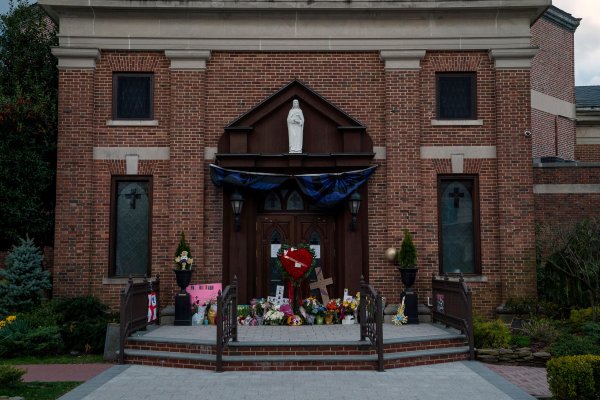 churches began reopening for the celebration of the eucharist, it was with significant restrictions. People have to wear facial coverings and be separated from one another by a safe distance. Human touch and bodily interaction have to be avoided. Even singing has been curtailed. Those ritual elements that we used to take for granted have been made precious by their absence.
Our daily lives, including our liturgical lives, are filled with questions. When will this terrible time come to an end? Will life ever return to what we thought of as normal? Will our human relationships and our liturgical worship ever be able to flourish again? How can we live in hope in /grow-african-violets-indoors-1902733-02-ae7c409a65ba4b949cb33518c37dd90e.jpg) the midst of so many unknowns? As I live with such questions, I often look to my African violets for inspiration.
the midst of so many unknowns? As I live with such questions, I often look to my African violets for inspiration.
Forty- five years ago, in the fall of 1975, my father gave me a small African violet plant that he had grown. Within several months, he had died as a result of being hit by a car as he walked across the Grand Concourse, a street in the Bronx. That African violet plant became a symbol of my father’s life for me, but eventually it would become even more than that.
When it became a mature plant, I began to propagate the violet by cutting leaves, rooting them in water, and then planting them in soil as my father had taught me. As the new plants grew, I gave them away to friends and members of my family. Eventually, the original plant died, but I had  made many plants from its leaves, and the African violets that I and my family have now are all descendants of that gift I received forty-five years ago. A friend of mine once incorporated my African violets into a homily he gave in a local parish on Pentecost Sunday. He used my practice of propagating new plants from the leaves of a current descendant of the original plant as a way of illustrating the principle that the church gives birth to the church.
In the 1980’s I learned an important lesson in hope from one of the descendants of the original violet. I had given it to an Ursuline friend and there was a fire in the house where she lived. The plant was badly damaged from smoke and water and my friend thought she would have to throw it out. Instead, I brought the plant home with me. I cut it back until there was only a stump left and repotted it. I placed it in front of a window, watered it regularly, spoke encouragingly to it, and waited. One day, after months of waiting, I saw a tiny green shoot coming from the stump. It happened to be Advent so I immediately thought of the line from Isaiah “a shoot shall sprout from  the stump of Jesse.” (Is 11:1) That shoot eventually developed into a plant that flourished, and my African violets became a living symbol of hope for me.
My violets continue to teach me lessons in hope, although in a less dramatic fashion. This past winter, I had to move them from in front of the window that usually gives them light. Soon, they stopped blossoming. Since I was used to them blossoming continually, this was a big disappointment. I had no flowers for several months and, when I was able to return then to their place in front of the window, it took several more months before a blossom appeared. Once again, I learned something about waiting in hope.
Now, as I wonder about when our families, friends, communities, and local churches will be able to come together and interact without fear of contaminating one another with the coronavirus, I look with gratitude at the lovely lavender blossoms on two of my plants and delight in the new shoots that have grown from a leaf I planted back in January, I am inspired to remember what a gift it was to be able to gather with other members of the corporate Body of Christ each Sunday, to move together in procession, to sit next to each other as we listened to the Word, to sing and clap to the music, to pray together in praise and thanksgiving, to touch one another as we gave the greeting of peace, to be nourished together by the eucharistic Body of Christ. I am inspired to continue living in the hope that our liturgical assemblies, our church, will flourish once again.
Margaret Mary Kelleher taught liturgy in the School of Theology and Religious Studies at the Catholic University of America.
Please leave a reply.