
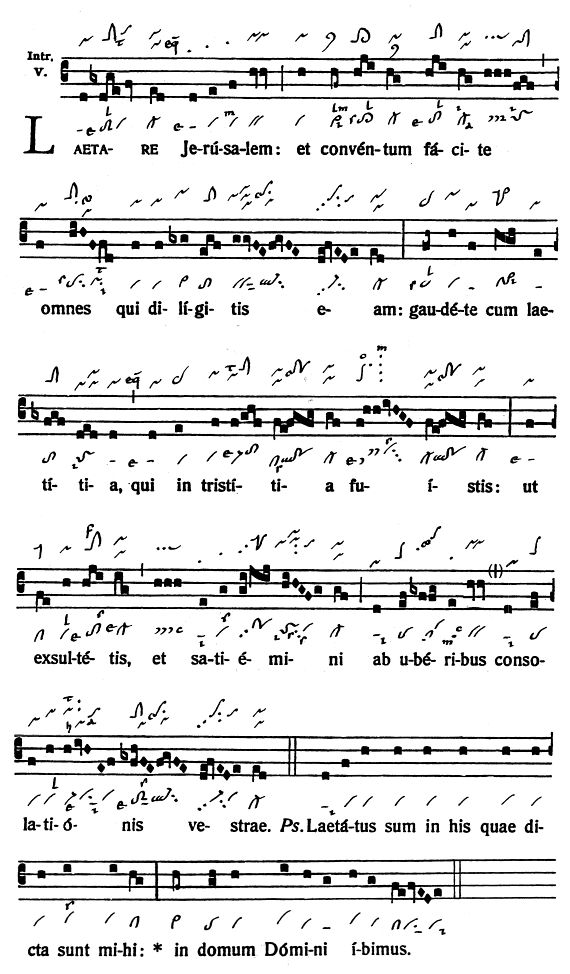
Laetare Jerusalem: et conventum facite omnes qui diligitis eam: gaudete cum laetitia, qui in tristitia fuistis: ut exsultetis, et satiemini ab uberibus consolationis vestrae.
“Cheer, Jerusalem, and gather, all of you who love her. Rejoice in happiness, you who have been in sadness. You shall exult and be satisfied by the breasts of her consolation.” (Is 66:10–11)
The point of this introit is not only the jubilant message itself, but the first word. The melody of laetare copies the ending of the Alleluja in the Easter Vigil. There are many other segments in Gregorian chants that have similar melodies, but – as recent research has shown – they are not exactly the same. This melody is exclusively designated to mark these two moments in the liturgical year.
This convergence can make clear that Lent is not a time when we have to ignore the message of Easter. Christian Lent is always fulfilled with the conviction that life is stronger than death. That is where all power of conversion has its roots.
Please leave a reply.