
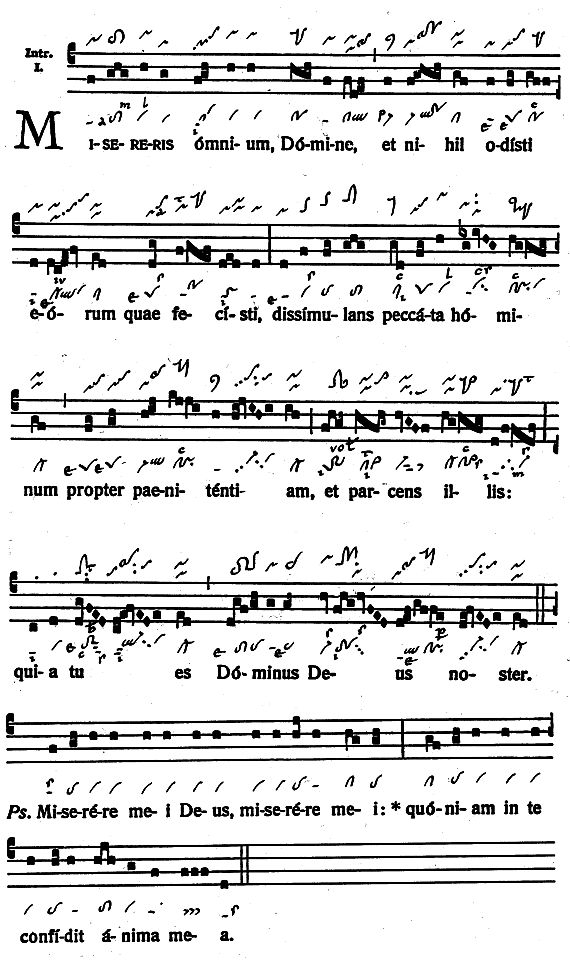
Misereris omnium, Domine, et nihil odisti eorum quae fecisti, dissimulans peccata hominum propter paenitentiam, et parcens illis: quia tu es Dominus Deus noster.
“You have mercy on everything, Lord, and you hate nothing of the things that you made. You cover the sins of humans for the sake of repentance, and you spare them, for you are the Lord, our God.” (cf. Wisdom 11:24–27)
Yes, Lent is a time where we confront ourselves with our mistakes and sins. Yes, that can be a frustrating business. Yes, that expects a lot of us, mainly truth and humility. Yes, Lent is a time of penitence and conversion, and if you take that seriously, it means a lot of hard work.
But Lent is definitely not a time of fear of God. God made us. He would not have created us if he did not love us. Lent and penitence do not mean: God does not like me anymore. Rather, what they mean is this: I have the opportunity to ask for God’s good will and learn to understand it better.
The longest syllable in the melody of today’s introit is the word tu, “you.” God does not turn his eyes away from us. We can say “you” to him, we can move toward him, we can renew our relationship with him.
Maybe that is the deepest meaning of Lent: God is not a “he” in the first place, but a “you.”
Please leave a reply.