
Martin Stuflesser and Tobias Weyler have together published the 264-page book Liturgische Normen. Begründungen, Anfragen, Perspektiven (“Liturgical Norms: Rationales, Questions, Perspectives”) with Pustet Verlag in Germany. With permission of Katholisch.de, Pray Tell is happy to present this interview about the study which the book reports on.
An interview of Fr. Martin Stuflesser by Tobias Glenz
According to the will of the church, worship services should not be celebrated arbitrarily. Thus there are liturgical rules, so-called “norms,” which represent a universal, binding benchmark for Catholic liturgy. In the history of Christian worship services these norms were at times understood more narrowly, at other times more loosely. The concrete liturgical reality today, however, is oftentimes not identical with the prescriptions of the liturgical books – there are departures from the norms. Why is this? The liturgy professor from Wurzburg, Martin Stuflesser, has researched with Hans-Georg Ziebertz, professor of religious pedagogy, the behavior of liturgical actors – priests, permanent deacons, full-time pastoral ministers, and conducted interviews. The study has now been published.
Question: Fr. Stuflesser, you investigated so-called “departures from norms” in your study. How frequently do such departures occur?
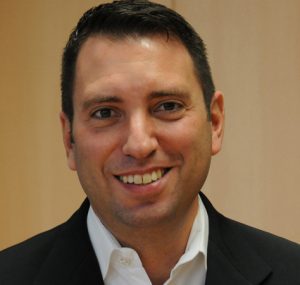
Stuflesser: More than half of the liturgical actors we asked regularly undertake changes in the liturgy in order to make the liturgical celebration “fitting” – for themselves and for their communities. So, many do not wish to comply with various liturgical prescriptions, but rather celebrate the liturgy other than as prescribed. It was really no surprise for us that the liturgy is adapted. But our study wished to find out where exactly the norms are departed from, and above all, the reasons for which this is done.
Question: In which parts of the liturgy are the departures from the norm particularly frequent?
Stuflesser: First, it concerns the realm of liturgical language, which is frequently criticized for being difficult to understand and cumbersome. People change prescribed prayers, seek out alternative prayers from relevant publications, or completely write texts for themselves – even including the Eucharistic Prayer. A further example is the area of lectionary readings: here readings are frequently omitted – mostly the Old Testament reading – , because they are found to be too complicated or unappealing. A further prominent example is the concluding doxology of the Eucharistic Prayer. Many priests have the entire community proclaim with him “Through him and with him and in him…” That is not what is prescribed. Since the early church, the community says only the “Amen” here, which ratifies the entire Eucharistic Prayer of the presider. The desire for the greatest possible active participation of all the faithful plays a role here. That is perhaps the most important finding of the study: departures from norms are never undertaken arbitrarily, but rather, the actors always have their reasons.
Question: And what are the reasons?
Stuflesser: One can detect among the actors roughly two basic directions: one group holds to the norms to the greatest extent possible; the other tends in general to depart from the norms. Which group one identifies with has much to do with one’s understanding of liturgy. When the primary goal is that the liturgy be a communitarian experience that gives people a “good space,” in that they pray and sing together, then one deals more creatively with the norms. Those in this group tend to find the prescriptions constrictive – after all, one wants to be responsive to the community and involve them actively. By contrast, the other side sees the liturgy primarily as an encounter with God with an official character and emphasizes uniformity for the universal church. Then the norms naturally will be seen as something venerable. Perhaps the official options in the liturgical books are made use of – but everything is within the bounds given by the norms.
Question: You explicitly reject the notion of liturgical “abuse” in your study. Why?
Stuflesser: First, we have no interest whatsoever in denouncing liturgical behavior that departs from the norms. We merely want to account for it empirically. “Abuse” would be the false concept for various reasons. At the latest, since the question of sexual abuse has arisen in the church, the word has connotations much too strong and negative. We’re working within completely different categories here.
Question: “Departure from the norm” don’t quite have the ring of something forbidden. Are all such departures legitimate then?
Stuflesser: Of course not. Our liturgy gives a whole series of options to choose from and expressly calls for adaptations to a given community. But canon law also says very clearly that the faithful have a right that the liturgy be celebrated according to the prescriptions of the church [Canon 214 – ed.]. For the Collect, Prayer over the Offerings, and Prayer after Communion, for example, it is foreseen that they be prayed exactly as printed in the missal. If some simply write their own unapproved prayer, that is not permitted.
Question: So, what happens when such illegitimate departures from the norms are discovered?
Stuflesser: It’s in the hands of the bishops. The Vatican instruction “Redemptionis sacramentum” elevates liturgical norms very high and also foresees the possibility of sanctions. We did not investigate how often these departures are communicated to the “higher ups.” But I could well imagine that some bishops would have sleepless nights if they knew that over 50% of their coworkers do not celebrate the liturgy as prescribed.
Question: One might think that liturgical norms are expendable, if it’s the case that one can get around them without any problem…
Stuflesser: Definitely not. Liturgical norms are needed because they represent an assurance of quality and provide a liturgical skeletal structure. But the question is yet to be answered as to how much uniformity the liturgy actually needs across the universal church in order for one to be able to say everywhere: when it says Roman Catholic on the sign outside, it’s really Roman Catholic inside. It is clear that the liturgy can and must be adapted to the given local congregation so that, with a view to language and ritual flow, the worship service can be celebrated authentically. Thus, in the field of liturgical studies we do not speak in the first instance within the categories of “permitted and unpermitted,” but rather “sensible and less sensible.”
Question: And what do these categories mean with a view toward departures from norms?
Stuflesser: A look at church history shows that many liturgical reforms came about from departures from the norms. These were movements “from below.” For example, when young monks at the beginning of the 20th century celebrated the community Mass in German in the crypt of Maria Laach, they did it at a time when this was actually prohibited. And yet, the Second Vatican Council picked this up at a later time, as more and more voices came from entire universal church considered it sensible to give greater place to the vernacular in the liturgy.
Question: You did research in various diocese for your study. Were there significant differences?
Stuflesser: Yes, differences, but proportionately not that much. The tendency was at least discernible for the diaspora to be more conservative, because of the desire for boundaries toward the other in order to form identity. The liturgy there becomes a marker of identity, and one tends to celebrate it as it is given in the official books.
Question: You investigated various groups of liturgical actors. Are there groups that make changes more than others?
Stuflesser: We were able to establish differences especially between generations. Among younger full-time workers, and especially in the younger generation of priests, one finds more rejection of and mistrust of free liturgical forms. Conversely there is the older generation, which was ordained immediately after the Council and took in that era’s spirit of breakthrough. Here things go strongly in the direction of freer forms. But these are swings of the pendulum. Painting it in black and white with “conservative young clergy against the liberal Council generation” would not be correct.
Question: From conservative quarters the accusation frequently is made that the reformed liturgy is particularly susceptible to wild “outgrowths.” Were there really no deviations from the norm in the preconciliar liturgy?
Stuflesser: I think this thesis is rather ridiculous. Naturally one can say that the preconciliar liturgy was more strongly regulated, and it clearly gave fewer possibilities for choices or possibilities of adaptation. But there have been departures from the norm in all eras of church history. When we look at the liturgical movement, such departure from norms is seen. And they were taken up by the church entirely intentionally and led to the liturgical reform. The overwhelming majority of bishops saw the need to take action. A glorification of the preconciliar liturgy as something which was always celebrated according to the norms is historically unfounded.
Question: What should be the result of your study, and what role do norms play for the liturgy of the future?
Stuflesser: Well, we didn’t develop any maxims for future behavior, but rather we started by determining how liturgical actors behave today. A very important next step would be to look at what congregations actually desire in worship services. How do the faithful imagine liturgy in the 21st century? For this we have already planned a follow-up project. In all communities there should be regular liturgical management of quality. But norms will also play a role in the future. There simply are “essentials” which are indispensable. I think of a unified order of lectionary readings and unified Eucharistic Prayers. But this does not mean that things can’t change in the future with respect to norms – that happens constantly. Take foot washing of women. Pope Francis washed the feet of women on Holy Thursday, although the norms had forbidden it at that point in time. As the highest lawgiver, he flouted the norms – and then at a certain point they were changed as a consequence. Today it is totally taken for granted that the feet of all baptized Christians can be washed. Liturgy is and always was something living that grows and develops further.
Von Tobias Glenz. Tr. awr.
Please leave a reply.