
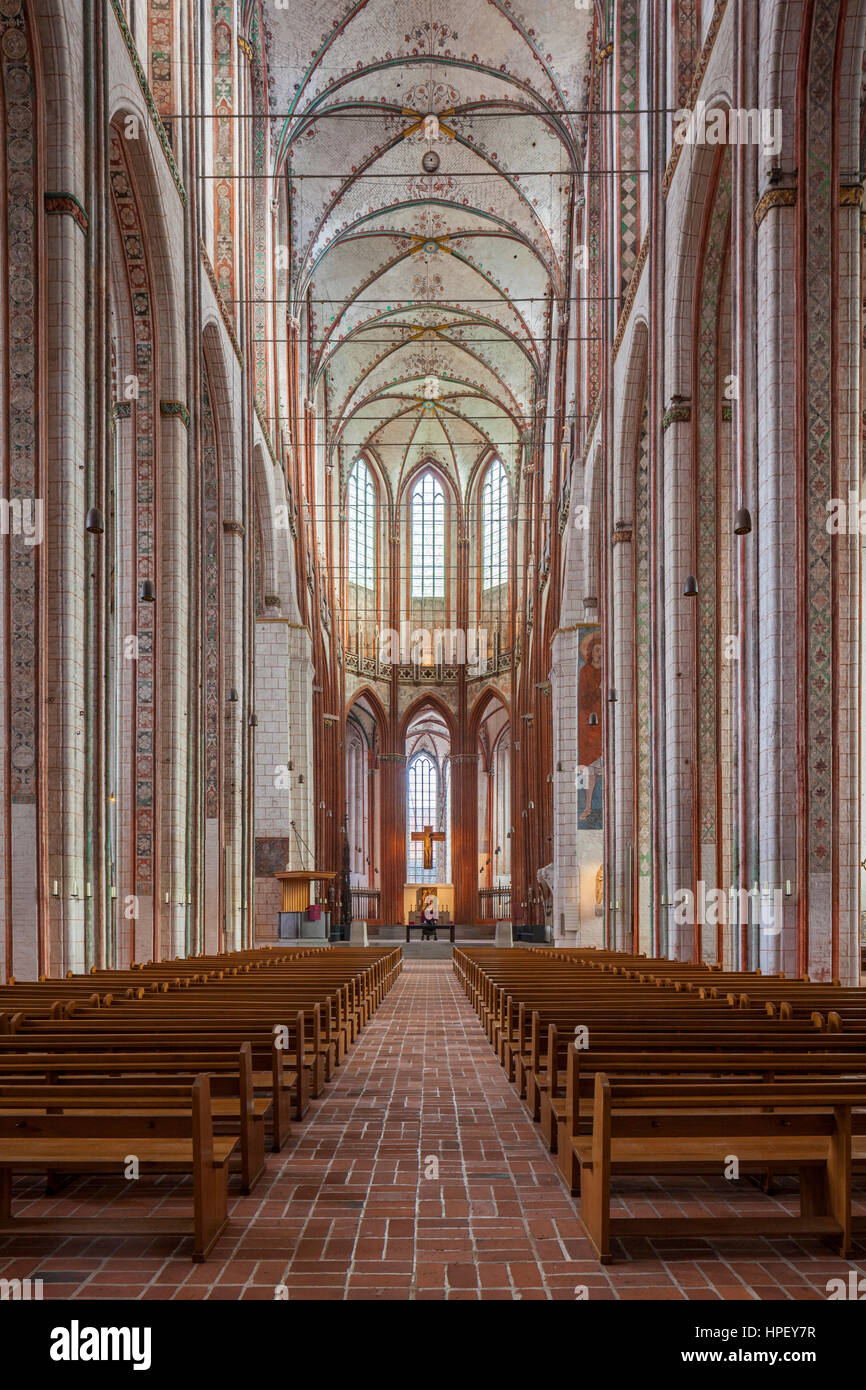
 Chapel of St. Ignatius (photo by Bruce Morrill)
Scrolling through my Facebook feed yesterday evening I came across an essay a professional colleague-friend shared from The University of Notre Dame’s Church Life Journal. Artur Rosman (the journal’s managing editor) introduces his “MacIntyre on What is Sinking Catholic Education” by taking what I could only read as a cheap shot against a chapel that I and thousands of others have experienced as a profound space for liturgy, prayer, and devotion:
There is a university chapel in Washington State that always makes me think it could be easily converted into a low-key Starbucks café. It would not be the most architecturally interesting Starbucks, but it would do. It would make money.
The university that houses the chapel is well-known for stressing its identity as formed by a brand name religious order, rather than being “Catholic.”
The author explains his introduction (I should note that he does not actually name the university) as a case-in-point for his skepticism about a proposal in a colleague’s prior article “that the rejuvenation of the Catholic liturgical imagination will take place through Catholic institutions of higher education.” Upon reading Rosman’s brief article through to his conclusion about the idolatry (his terminology) Catholic universities practice, I decided I could not resist posting the following comment:
There is a university chapel in Washington state that for the six months while I was a visiting professor there proved an inspired and continuously inspiring space for my daily prayer life, as well as weekly celebration of the Lord’s Day. It has no mass-produced plaster statues of European Jesus and Mary, all polychromatic and suitable for instructing grade schoolers, no cartoonish stations of the cross, no faux-neo-gothic (structurally unnecessary) arches running alongside deep rows of pews. No, it has seven remarkable skylights inspired by the seven signs (miracles) in the first half of the Fourth Gospel—each traversed by a beam glazed in a different color so that the mystery that gospel proclaims as Light might come at many angles and cast a litany of creation and redemption across the interior through the seasons of each year (the sun’s angle gradually rising and falling over 365 days). I could go on at length describing the artistic and theologically informed genius of the building’s architecture, art, and furnishings. I would note that the singular problem this religious-order-sponsored University had with its chapel, then many years into its use, was that they’d underestimated the necessary seating capacity. Repeatedly I witnessed Sunday Masses that were standing room only. I’ll leave aside listing the accolades and awards the chapel has garnered, even as it has become a sought out landmark by international visitors to that city in Washington state. After all, the author began his essay by dismissing the chapel as a sad excuse for a Starbucks outlet.
In my zeal to counter Rosman’s description of the Chapel of St. Ignatius I admittedly fell into at least one line of similarly dismissive characterization of the type of liturgical decoration and design that I suspected might be more suitable to his and like-minded colleagues’ agendas for the reform (of the reform?) and renewal of US Catholics’ ever-decreasing rate of regular Mass attendance–not least the distressingly low rates of participation in Sunday worship among the younger generations. I cannot be sure of the author’s intent on that point, but my hermeneutical hunch (“the worlds” both “behind” and “in front” of the text) arises from more than two decades of witnessing Catholic universities respond to criticism of the lack of crucifixes in classrooms, with the response often being to install small, mass-manufactured crucifixes on the walls. I leave it to interested readers to do the easy web search of blogs and posts and articles on that topic.
If nothing else, the undeniable power of symbol for individuals in social bodies (in this case, US Catholicism) comes through clearly in this instance of two university employees (Mr. Rosman and myself) demonstrating seemingly polar-opposite views of whether, how, and what kinds of liturgical art and architecture show promise for faith-formation on the 21st-century campus.

Please leave a reply.