
On October 31, Pope Francis will take part in a historic vespers service in Lund, Sweden. This service will be the inaugural service for the year leading up to the 500th anniversary of the Reformation in 2017.
Every day until then, Pray Tell will be running a feature highlighting papal ecumenical gestures to frame this historic event.
More dramatic than the 400 year silence between the Pope and the Archbishop of Canterbury was the 1500 year silence between the Pope of Rome and the Pope of Alexandria, as well as the other Oriental Orthodox. Since the disputes over the language of Christ’s natures at Chalcedon in 451, the Coptic Church, along with the other Oriental Orthodox Churches had not been in dialogue with Rome.
 Beginning in 1971, though, a commission between the Coptic Orthodox and the Roman Catholics was established to begin this process of dialogue. This process of dialogue and discernment would reach its head in May of 1973, when Pope Paul VI hosted Pope Shenouda III for a week (the 4th-10th of the month).
This meeting with the Shenouda was not Paul’s first meeting with the Oriental Orthodox. In May, 1970, he met Patriarch Vasken I, the Vasken I, Supreme Catholicos-Patriarch of all Armenians.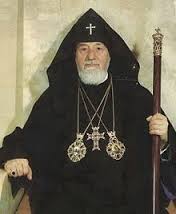 This meeting was highlighted by the signing of a Common Declaration centering on the shared faith in Christ and calling for a closer cooperation between the churches. A year later, from October 25th-27th, Pope Paul hosted Mar Ignatius Jacob III, Syrian Orthodox Patriarch of Antioch and all the East. This meeting, too, was punctuated by a Common Declaration.
What set apart the dialogue between the Copts and the Roman Catholics, though, was that this meeting was the product of two years of theological deliberation and discussion aimed at healing the 1600 year old wounds that had divided the two churches. Because of this, the terminologies that had divided them were avoided in the discussion. When Shenouda arrived in Rome on May 4, 1973, he and Paul had a long private meeting. He had another private meeting with Paul the next day, after which he delivered his first address, in English, and Paul delivered a response. The dialogue played out during the liturgies and meetings of the next five days, leading up to the signing of the common declaration on May 10. The Common Declaration began by stating that
We have met in the desire to deepen the relations between our Churches and to find concrete ways to overcome the obstacles in the way of our real cooperation in the service of our Lord Jesus Christ who has given us the ministry of reconciliation, to reconcile the world to Himself.
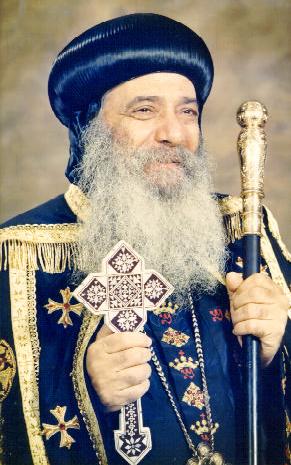 The two popes pledged to begin regular dialogue at once with a first session meeting until 1979. A second session met from 1979 until it was interrupted by unrest in Egypt in 1981-85, then again following 1985. The entire public dialogue of the historic first meeting is given in a booklet published by the Vatican, that prefaces each piece and contains the continued dialogue through 1988.
Although these three parts have highlighted Eastern Orthodox, Anglican, and Oriental Orthodox relations with the Pope, this is not to downplay the huge leaps made in the pontificate of Paul VI in terms of ecumenical relations with the Protestant churches. Over the time frame surrounding and following the Second Vatican Council, official dialogue was begun with most major Protestant groups, notably with the Lutherans. Twice, in 1969, and in 1976, Paul received delegations from the LWF, and it was in this time that the dialogue was begun that would lead to the JDDF some two decades later.
Please leave a reply.