
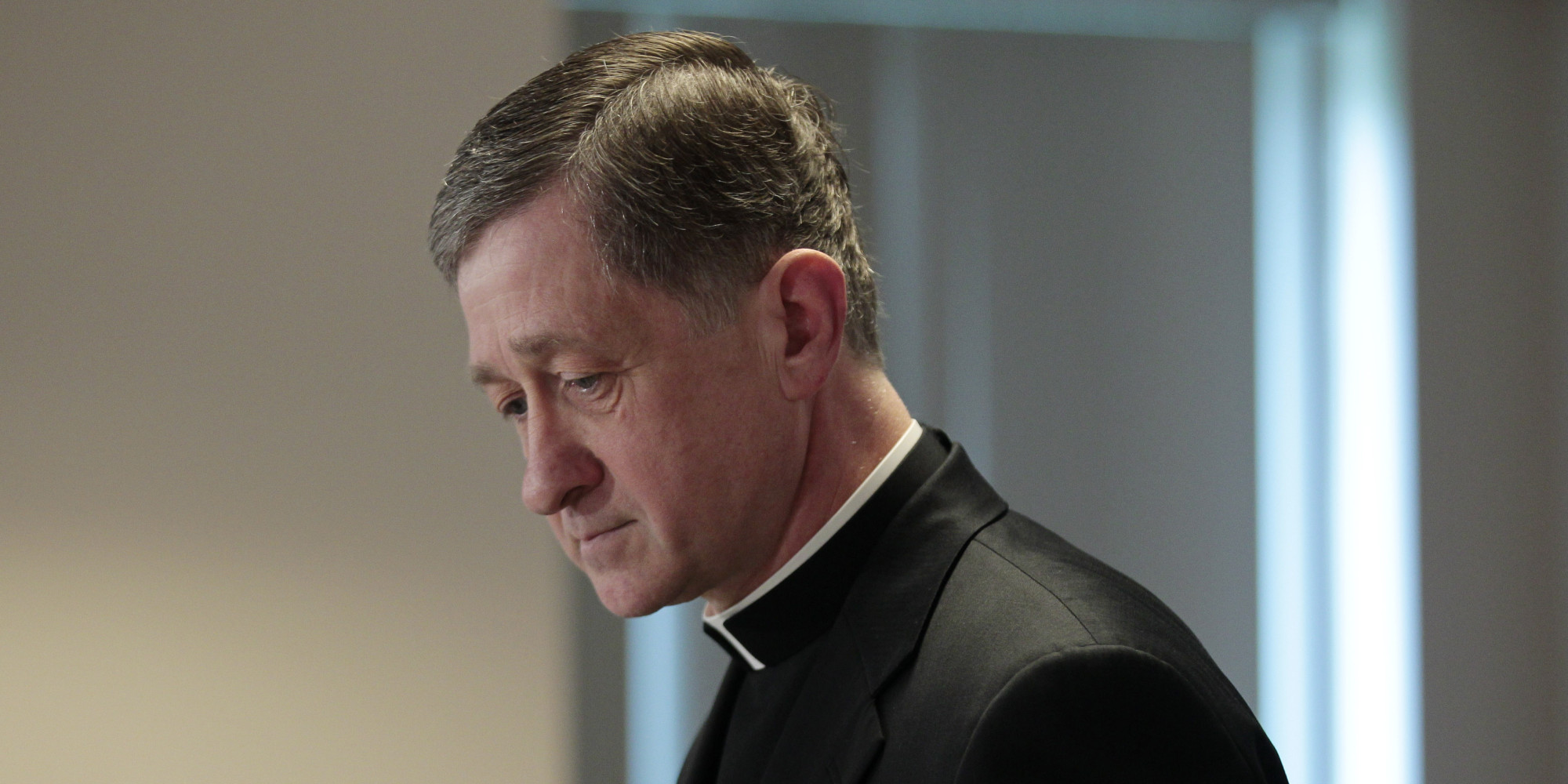
Massive Overhaul Expected in Chicago With Parish Closings and Consolidations Likely

Theย Chicago Tribune is reporting that the Archdiocese of Chicago is considering plans to close many of its parishes by the year 2030.

According to the reports, Archbishop Blase Cupich has been meeting with priests and advisers in recent weeks to consider the plans.

Chicago Archbishop Blase Cupich told priests and advisers in meetings in recent weeks that the shortage โ€” an estimated 240 priests available in 2030 for the archdiocese’s 351 parishes โ€” could necessitate closings and consolidations, according to the sources. The archdiocese governs parishes in Cook and Lake counties.

Based primarily on those projections and on future capital needs, the priests who attended the meetings say a large number of churches could close over the next 14 years. Several of those priests who attended the sessions with the archbishop shared details about the reorganization process with the Tribune, some requesting anonymity because of the sensitive nature of the discussion and because they didn’t have permission to speak on behalf of the archdiocese.

Officials at the archdiocese, contacted Thursday, said they could not answer any of the Tribune’s questions.

The reorganization process will kick into high gear next week when auxiliary bishops begin meeting with lay leaders and parish staff in their regions to discuss solutions.

In 1990, faced with severe budget shortfalls, Cardinal Joseph Bernardin implemented a plan to close and merge more than 40 parishes. Officials close to current discussions are indicating that Cupich is considering closing and consolidating at a larger scale.

No cost-saving target has been announced for this plan, but clergy who have been discussing the reorganization since September say the plan is less about economics and more about fortifying the church’s mission in the face of an anticipated shortage of priests. While the closings in the 1990s addressed a budget shortfall that the archdiocese could not afford at the time, priests say Cupich has embarked on the latest effort because the church must ensure its future.

In a message to parishioners that appears this week in Catholic New World, the archdiocesan newspaper, and that Cupich has shared with priests and advisers in the past month, the archbishop casts the parish reorganization as an opportunity for renewal. “Demographics have shifted dramatically,” he wrote. “Some of our parish buildings are in disrepair. We have fewer priests to pastor our faith communities. The result is that we end up spreading our resources too thinly.

“I would be less than honest if I did not acknowledge that by the time this consultative process is complete, we will mourn together the loss of some parishes,” he added. “But that will not be the final word. By having the boldness to leave behind familiar ways of doing things, we can seize this season as one that is not simply of loss, but rather of renewal.” Priests who spoke to the Tribune said, based on the expected priest shortfall and future infrastructure needs, as many as 100 churches could close over the next 14 years.

Cupich has not been specific as of this point as to the number of parishes that are expected to close. It is estimated that by 2030, there will be only 240 priests remaining in the Archdiocese.

The full Chicago Tribune report is available here.

Editor

Katharine E. Harmon, Ph.D., edits the blog, Pray Tell: Worship, Wit & Wisdom.

Please leave a reply.

Comments

32 responses to “Massive Overhaul Expected in Chicago With Parish Closings and Consolidations Likely”

  1. Mike McCallion

    I just wonder how many priests are in positions other than being pastors (professors, chaplains, diocesan bureaucrats, marriage tribunal, etc.- I admit I do not know the data). I understand priests occupy other roles, but if local parishes are the backbone of dioceses, then perhaps these other roles should be questioned (I also understand it is not just a problem of fewer priests). I humbly suggest, it is not so much a priest shortage problem, but a priest distribution problem – at least in part.

    1. Charles Jordan

      @Mike McCallion:
      Regarding: “I just wonder how many priests are in positions other than being pastors (professors, chaplains, diocesan bureaucrats, marriage tribunal, etc.- I admit I do not know the data). ”
      – One expects that many priests are not available for parish work due to a mismatch between the pastor’s job profile and the individual priest’s abilities and personalities.
      – Other priest pastor in different settings as greater need dictates.

      1. Karl Liam Saur

        @Charles Jordan:
        “One expects that many priests are not available for parish work due to a mismatch between the pastorโ€™s job profile and the individual priestโ€™s abilities and personalities.”

        You can say that again. It’s frightening when priests who lack pastoral skills are appointed pastor, and imagine they have what nuns of decades yore were told was the “grace of state” when they were marched into leading classrooms with zero training. Magical thinking about grace strikes again.

  2. Rita Ferrone Avatar
    Rita Ferrone

    There are plenty of people available and willing to do the work. The church just doesn’t want to ordain them.

    1. James Anderson Murphy

      @Rita Ferrone: Amen.

    2. Kathryn Mistry

      @Rita Ferrone:Thank you for stating the obvious! Until the Church accepts the full participation of women (even in non-ordained positions) the role of the Church in modern society will continue to decline. Unfortunately misogyny reigns unchecked!

    3. Leslee Moore

      @Rita Ferrone:
      Amen!!

  3. Scott Pluff

    This may sound cynical, but given the steep and steady decline of attendance at Sunday Mass and other sacraments, a priest shortage may be the least of our worries in years to come. Too many leaders in the church are content with the status quo or at best tinkering around the edges with renewal. Without a radical reorientation of our resources and efforts toward evangelization, the last person to leave can turn off the light.

    1. Alan Hommerding

      @Scott Pluff:
      Amen.
      I think Sacrosanctum Concilium was prescient on this point in #9 (which I like to think of as the caution against liturgiolatry). Before the Council told us the liturgy was source and summit in #10, they told us liturgy wasn’t the whole work, and that first off others needed to hear and know about Christ.
      Increasingly, I wonder if the declining downward trend in official participation in Christian churches (not just RC) by the society at large isn’t a manifestation of the tendency to think of Jesus of Nazareth as one among many great ethical teachers, while not believing in the Christ event (Paschal Mystery, whatever term you wish to use) as a normative – much less exclusive – way of achieving salvation, heaven, grace, fulfillment, inspiration, etc.

  4. David J. Wesson

    My question to the readers is what liturgical resources are available for parishes facing closure/merger and what are available for buildings that will be no longer used for worship? The Presbyterian Book of Common Worship has good ones, but I am unaware of any others.

    1. @David J. Wesson:
      While there are no “official” Roman Catholic resources, many best practices and other excellent considerations have been assembled by Michael Weldon, OFM in his book, A Struggle for Holy Ground: Reconciliation and the Rites of Parish Closure.

  5. Mark Piper

    I attend Mass at a parish on the far South Side of Chicago. My wife and I are either the only people under 40 or one of up to four couples under forty who attend Mass at this church.

    When I “graduated” from my Catholic elementary school outside of Madison, WI most of my 20 classmates were part of families that were regular Mass attendees. I know that 10 or more of my classmates have not stepped foot in a Church of any kind, let alone the one that provided their Sacraments in years (many are not even CEO Catholics (Christmas and Easter only)). A majority have married at a non-Catholic church.

    It isn’t just a priest shortage that brings this news about in Chicago. And it’s not just “nones”, it is the seemingly expoential growth of the “dones” that has brought this about. What has brought about so many “dones” young or old, is a separate issue. However, this growing “dones” will raise a larger generation of “nones” and so I worry this is the beginning of a death spiral not simply a massive shift.

  6. John Drake

    Rita, James,

    Assuming you are referring to women, the church CAN’T ordain them.

    1. Rita Ferrone Avatar
      Rita Ferrone

      @John Drake:
      What about married men.

      1. Bill deHaas

        @Rita Ferrone:
        Thank you – and how many of these parishes are active communities rather than *sacramental service stations*?

    2. Reyanna Rice

      @John Drake:
      Is convinced they “CAN’T”….I think there is a difference. What can be convinced can be unconvinced.

  7. Michael Slusser

    I’m concerned that dioceses get one thing right: which elements are stable and which are movable? The people or the priests? Letting the parish communities and their people be the stable element, and figuring out how best to use the ordained to serve them, is my strong preference; The Church is of and for the people. Taking the ordained population, constantly changing as it is, and using that to determine how many parishes there will be, makes the people the movable parts. That’s wrong theologically, but also sociologically: when a parish is closed–and especially when it is closed against the community’s will–a significant number of people will not connect with some other parish.

  8. Alan Hommerding

    To be fair, the reporting on this comes from the Chicago Tribune, which only gives the projection of the number of clergy as the only metric. The archdiocese is considering other metrics as well – number who attend Mass on Sunday vs. the size/seating of the building. Maintenance costs and age of the structure(s), etc. And not every small(er) congregation will be closed; attention is being paid to under-served populations as well.
    But parishes have to live with economics and other realities of ongoing viability. There was one rather notable city parish “rescued” a number of years ago by a group of Catholics who wrote checks from their large suburban homes/mansions. I’m not criticizing them for doing that, but they evidently weren’t willing to commit flesh-and-blood to this parish they professed to love. Years down the road, the small number of households who do commit are finding themselves once again unable to support/sustain/repair the facility.
    An Incarnate religion lives with the realities of the world.

  9. Richard Malcolm

    Scott Pluff : This may sound cynical, but given the steep and steady decline of attendance at Sunday Mass and other sacraments, a priest shortage may be the least of our worries in years to come.

    I’ve been thinking that for a while myself.

    The passing of Silent Generation and the Baby Boomers from the scene will remove (is removing already, to some degree) a thick slice of the priestly manpower pool. But it’s also going to remove what seems to be the thickest slice of laity in parishes in many parts of the country – certainly in my neck of the woods here on the East Coast. There are not so many Gen X or Millennials coming up behind them.

  10. Sean Keeler

    Rita Ferrone : What about married men.

    Has anybody conducted a study of the viability of such a plan? Assuming that the Church were even to approve it, there would be numerous considerations such as:
    – duration and expense of training
    – financial responsibilities of married/parental men during training
    – financial responsibilities of married priest
    – longevity of married priests
    – part time or full time priests
    – regular job vs priestly responsibilities
    – etc etc

    I’m not against the idea from the outset, but wonder if the effort would have significant benefit for the Church or not, and whether it might actually serve to dissuade young (and unmarried) candidates from pursuing the opportunity.

    1. Bill deHaas

      @Sean Keeler:
      Where there is a will, there is a way. Other denominations have been able to sustain this for generations.

    2. @Sean Keeler:
      I think your questions need to be asked. But I think we all realize the 1978-2013 climate precluded any such study, or even the mention of it. Any bishop suggesting it would get slapped down quickly. By Rome and brothers in the episcopacy.

      The institution is concerned about a continuation of a comfortable and familiar system. Hence the resistance to serious evangelization initiatives even after Paul VI penned Evangelii Nuntiandi. Let alone a look at married clergy.

      Even more serious than the rejection of married candidates is the substantial ignorance of the need to make disciples among the baptized. If we attended to that now, I suspect that candidates for Holy Orders would be forthcoming in another decade. But for too long, Roman Catholicism has ignored baptismal discipleship and settled for a body of seminarians possibly devoted too much to piety, loyalty, and safety, and not enough to being settled in the call of baptism and able to discern from there.

      What was it the Lord said? Fear is useless; what is needed is trust.

      Put simply, we suffer a lack of trust. Until we overcome it, we will lack the resources we need to be a living, thriving Body.

  11. Charles Jordan

    View from the Pew
    Regarding: “Priests who spoke to the Tribune said, based on the expected priest shortfall and future infrastructure needs, as many as 100 churches could close over the next 14 years.”
    – For the short term, change the paradigm and train lay people to be pastors thereby freeing presbyters to be circuit riders – going from parish to parish to celebrate the Eucharist.
    – In the long term invite married persons to consider ordination. Thereby increasing the number of at least of part time priests who can assist with the Eucharist and other sacraments. That is, in the mode of training of deacons and placement in their assignments.

  12. Relevant to this conversation, Vatican Radio is reporting this morning:

    Card. Parolin addresses Gregorian conference on celibacy

    The Secretary of State of the Holy See, Cardinal Pietro Parolin, delivered the keynote address on Saturday morning at a conference being hosted by the Pontifical Gregorian University on the past, present, and future of the discipline of priestly celibacy in the Catholic Church.

    In his prepared remarks, the Cardinal Secretary of State recalled that the requirement of celibacy is a disciplinary one that has never been imposed by the whole Church, and one from which men have more or less frequently been dispensed.

    Cardinal Parolin addressed the opinion that it is time to lift the discipline in the Latin Church, where it is mandatory for all priests, and not just bishops and religious. โ€œIf the problematic [situation of a so-called โ€˜vocations crisisโ€™] does not appear irrelevant,โ€ he said, โ€œit is nevertheless necessary not to take rushed decisions, or decisions based solely on the basis of present need.โ€

    Cardinal Parolin went on to say, โ€œIt remains true now as ever that the exigencies of evangelization, together with the history and multiform tradition of the Church, leave open the possibility for legitimate debate, if these are motivated by the [imperative of] Gospel proclamation and conducted in a constructive way, [and] safeguarding the beauty and high dignity of the choice for celibate life.โ€

  13. Jeff Rice

    The Crux editorial this past June offered some constructive possibilities: http://www.cruxnow.com/church/2015/06/16/its-time-to-reset-our-pastoral-strategy-ordain-married-men/

    One immediate avenue could be to call select men from among married deacons to priesthood. The Catholic Church in the United States today has some 18,725 ordained deacons, 94% of them married men and 12,358 of them in their 50s and 60s, according to CARAโ€™s 2013-14 study for the USCCB. A few single and/or widowed permanent deacons have taken additional training, become priests within a few years, and are serving well. The same could be done with select married permanent deacons, individuals of proven qualities discerned apt to serve as priests, able and willing to do so.

    If just 10% of our 18,725 permanent deacons were discerned and called to priesthood in the next few years, the looming disaster of losing 50% of currently active priests to retirement would be alleviated โ€” not sufficiently, but somewhat. That could provide breathing space for the Church to train and prepare many other married men willing to serve as priests”

  14. Elizabeth A Siler

    What about married men? What about women? The shortage of priests can be solved. The Church needs to look first at the resources in the pews: women and married men.

  15. Frank Ferrone

    Into the mix of solutions I’d also submit that of non-permanence of the priesthood. In a world where lifespans are long and changing jobs is more the norm than exception, I think the notion of an unchangeable vocation is also due for an overhaul. I can count easily a number of liturgical musicians or campus ministers who migrated away, having served well as full time ministers, but feeling duly called elsewhere, and you probably can too. As far as issues such a cost of training for people who would only be with us temporarily, what seminaries are full to capacity and couldn’t readily accommodate extra seminarians?

  16. Jeffrey Maurer

    From Arcbishop Cupich and normal pastoral planning to the non permanent and ethereal sacramental character of Holy Orders….whew a lot of distance jumped.

  17. While I’m not bothered by thread wandering off to new(er) life, I do have some skepticism on the need to look at non-permanent ordinations. Frank’s point is well-taken, in the sense that perhaps the call to Orders should come in mid-life, rather than at the commencement of a career in ministry.

    With some well-discerned exceptions, perhaps it would be better to admit seminarians (married or celibate or otherwise) after the age of 40, after there has been evidence of a life of baptismal discipleship. And demonstrated competence in the spiritual life, in preaching, administration, teaching, and other charisms.

    As for the situation in Chicago, perhaps “endangered” parishes might surface viri probati for the consideration of the archbishop. Seems like they have at least a decade to sort out making Mundelein more friendly to married persons with families.

  18. Jeffrey Maurer

    Most of these parishes are shot demographically. We just went through this in the Archdiocese of New York, most of these places needed to be closed 20 years ago. A community of 150 where there used to be 1000 will never, married priests or not, be able to support all the facets necessary for a truly vibrant parish.

    1. @Jeffrey Maurer:
      I think your threshold is pretty high. 30 households tithing at 5% would be able to support one full-time minister at 67% of income, plus the other third for other budget needs. A vibrant community doesn’t require size, or even a building. Discipleship is all that is needed. But yes, a community of a few hundred with an enormous physical plant and lots of $1 and $5 bills in the collection isn’t going to survive.

  19. Ed Nash

    Can’t?…Won’t. Let’s be honest. And folks the Catholic Church has married priests. Let’s be honest.

    If the reason the Church cannot ordain women is because Jesus never picked them then let the parish and institution doors shutter because the founder of the largest religious group in the history of the world couldn’t see far enough into the future to realize that the places of worship die because he only picked one gender.

    People have given trillions to open these parishes and because the man power is short, the Church will walk away from them…probably selling them and giving the money back to the families that scraped dollars together to build those buildings. Or they will keep the funding from the sales to fund bigger…what.

    If only Jesus would have told the Church to be unbelievably creative in seeking solutions to pastoral shortages…then maybe we would have a mandate rather than blankly staring into the camera and say “the Church is powerless.”

    Dioceses across the country are willing to let these parishes of people and buildings go to dust claiming to tens of thousands that have staffed Friday fish fry events “don’t worry, it’s just renewal.” I admire Archbishop Cupich, I did in Spokane and now in Chicago but to say the Church “can’t” (#8 above) puts the blame back on an itinerant preacher from Nazereth that didn’t have the brains to see this coming.

    Lent awaits and I will try to be in a better mood.


Posted

in

,

by

Discover more from Home

Subscribe now to keep reading and get access to the full archive.

Continue reading