

Alan Hommerding and I were having a Vulcan mind meld of sorts yesterday and he actually initiated this topic (thanks!). It stems from another problematic but common attitude I feel the need to “fast from” — or at least become more aware of — for Lent this year. It’s the notion that small pleasures are an indulgence — not, of course, in the penitential sense! Rather, it seems, they serve as little gifts or rewards that I can give myself. Often, as Alan suggested, they are motivational or self-congratulatory, as in, “if I get all this done before 5 I’m getting myself a milkshake.” At other times, as on some baffling parenting blogs, it’s the name for minimal self care, as in, “I indulge myself by making sure I get ten minutes of quiet every day.”

Of course, like the idea that fasting is dieting, allowing gifts to slide into (self-) indulgences, and then letting me think that indulgence is the same thing as self care makes it easy for marketers to sell me more, and even more. “Indulge yourself!” “You deserve it!” Here it is again: it’s good for me!
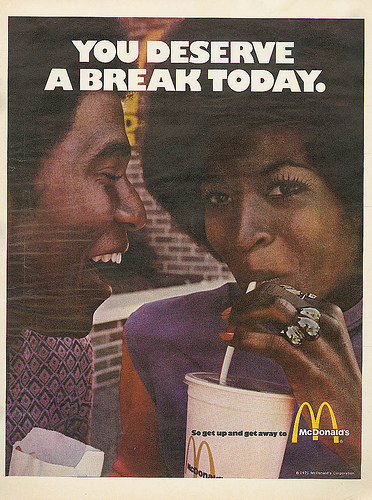
But gifts are gifts, and indulgence is not; it takes the pleasure out of pleasures because it takes the meaning out of them. A gift, in addition to the sensory pleasure of the thing itself (a bar of chocolate, for example), carries an additional pleasure, a kind of surprise and delight that comes from the fact that it goes beyond what I chose for myself. Jean-Luc Marion calls this aspect of gifts their “givenness” or (later) “excess.” In that sense a gift captures our experience of being in a relationship, which means being led on, for the sake of the relationship, into being and doing things that are beyond what I would have chosen for myself.

Hans Urs von Balthasar suggests that a similar experience of superabundant joy, of something akin to our experience of surprise and delight, is the key of the love of Father, Son, and Holy Spirit. We are, I think, trying to replicate this joy with our self-indulgences, but its easy to end up with addiction rather than connection.
No need to give up milkshakes (in fact, that might be buying into an image of health that’s not actually good for me), but I do think I should practice prayerful discernment: allow myself the joyful surprise of becoming aware of God’s gifts (and others), but cut out the poor imitation of self-indulgence. Care for myself as I would for another, the whole body, mind, soul without guilt, but not cultivate unnecessary “needs.”
Please leave a reply.