“Liturgical Studies and Liturgical Renewal,” Fr. Anscar Chupungco, OSB

We present the entire address of Anscar Chupungco — follow the first link below. – Ed.

World-renowned expert in liturgical inculturation, Fr. Anscar Chupungco OSB, challenged recent announcements on liturgical reform decrying their “absence of a historical and cultural approach to the liturgy, or, in a word, the inability to fuse together the two basic concepts of Vatican II’s liturgical renewal, namely sound tradition and legitimate progress.” He noted that recent statements coming from no less than the papal master of ceremonies, Msgr. Guido Marini, which called for a reform of Vatican II’s reform were part of an agenda to turn the clock back 50 years, that “seems to conveniently forget that since Vatican II, the Church has been marching with the times, acknowledging the changes in social and religious culture, and adopting new pastoral strategies.”

Fr. Chupungco received a standing ovation for his paper, “Liturgical Studies and Liturgical Renewal” that was delivered at the launch of The Broken Bay Institute-University of Newcastle’s programs of Liturgical Studies (Graduate Certificate in Theology – Liturgical Studies and Master of Theology – Liturgical Studies). Fr. Chupungco, a scholar whose expertise in liturgical inculturation has placed him in a critical staging area for the Church, is the first Filipino on the Pontifical Institute’s faculty, serving as the Institute’s President for 12 of his 23 years in Rome.

Fr. Chupungco noted that students of liturgy should be aware of recent developments, including recent Roman documents “that are becoming increasingly perplexing.” Fr. Chupungco noted that the good “student of liturgy should know how to critique historical development in the light of Vatican II’s liturgical principles, like the central place of the paschal mystery, the place of God’s word, active participation with all that this implies (vernacular, congregational singing, lay ministry), and the ecclesial dimension of the sacrament and sacramentals. These constitute the guiding principles to decide whether things are liturgically acceptable or not.” Fr. Chupungco urged students to become “equipped with a critical mind that allows them to weigh the value of new norms and directives, though always in the spirit of ecclesial obedience.”

Fr. Chupungco concluded: “The long and short of it is that liturgical reform requires serious academic work, not mere romantic attachments to the past that close the eyes to the reality of the present time. The drive for legitimate progress makes us run towards the realisation of Vatican II’s liturgical reform, but we should not run as if we did not carry on our shoulders the weight, both heavy and precious, of sound tradition.”

Source: CathNews, Australia

Other Voices

Please leave a reply.

Comments

31 responses to ““Liturgical Studies and Liturgical Renewal,” Fr. Anscar Chupungco, OSB”

  1. I have some serious doubts about the rhetoric of “reform-of-the-reform,” since I think it often masks a nostalgic restorationism. But I become a bit more sympathetic when I read someone saying (approvingly) that “since Vatican II, the Church has been marching with the times.” Of course I know that Fr. Chupungco is a more sophisticated thinker than this single quotation would indicate, but it is these sorts of statements that give the reform-of-the-reform rhetoric its traction.

    1. Karl Liam Saur

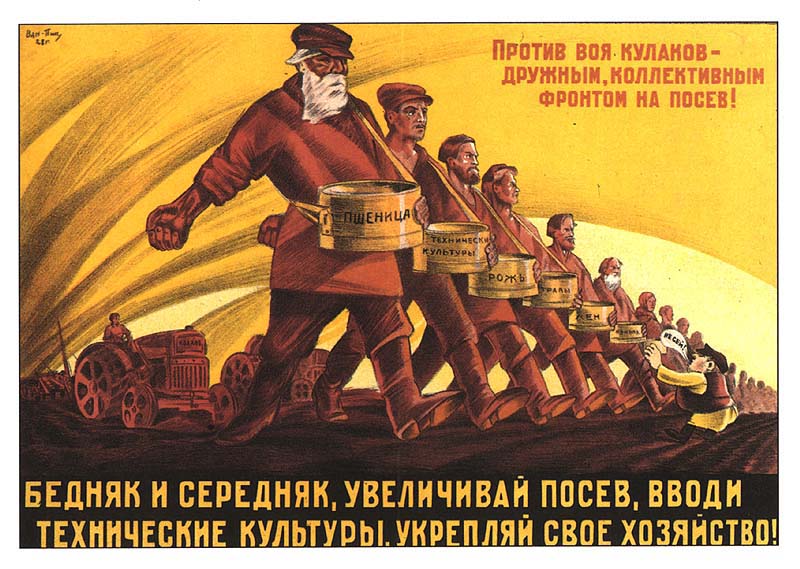
      I agree; the rhetoric brings to mind images like this:

      http://www.sovmusic.ru/jpg/posters/ussr0482.jpg

      Rallying the like-minded tends to get in the way of persuading the opposite-minded. There’s far too much of it in Catholic liturgical discourse. Anyway, his remark “but we should not run as if we did not carry on our shoulders the weight, both heavy and precious, of sound tradition” is a helpful balance.

  2. J Peter Nixon

    Any chance we can get a link to the full text of the address?

  3. Anthony Ruff, OSB Avatar
    Anthony Ruff, OSB

    I’ll work on it.
    awr

  4. Dear FC Bauerschmidt,
    I would offer the following video as examples of clearly defined “rhetoric” regard “Reform2” proponents.

    http://www.vimeo.com/8941838

    1. Thanks for that video! Are we going to let the liturgical experts, i.e. elitists, tell us that our nearly 1500 years of Latin Rite heritage are nothing compared to what “they” say is the “spirit of Vatican II” which in only 45 years supposedly trumped as “new and improved” everything that preceded it? ? I prefer what Msgr. Marini speaks of, as it is in continuity with the Holy Father’s writings and example. The Holy Father is calling for “organic” development of the Liturgy, which an “elitist” committee in Rome foisted upon the universal Church after Vatican II. Vatican II was much more measured and nuanced about any future revisions compared to what a small body of so-called liturgists eventually imposed upon us with the help of Pope Paul VI. These revisions, while authoritative and yes valid, are in no way comparable to the liturgical document of Vatican II–therefore Vatican II actually must be the hermeneutic we must follow in the “reform of the reform.” We must go back to what Vatican II actually requested! The Holy Father is on to something. Liturgists still living in the pseudeo-euphoria of 1965 need to sober up–it’s 2010! We’re not trying to turn the clock back on Vatican II, only on the ill-advised post Vatican II revision of the Mass and lack of oversight on vernacular translations and just what inculturation means. Not everything in any one’s culture is good or should be dragged into the Latin Rite liturgy. Some things are good. The question is, who decides? I think our Roman Catholic Tradition and ecclessiology makes that quite clear.

      1. Anthony Ruff, OSB Avatar
        Anthony Ruff, OSB

        Fr. Allan, I live right in the thick of liturgical reform in Collegeville, and I honestly don’t know anyone who is “still living in the pseudo-euphoria of 1965.” I do know lots of sincere people of differing opinions who are doing their best to serve the Church. I’m finding some of your stereotyping and word choice to be divisive.
        Pax in Christo,
        awr

  5. Robert Burns

    “I’m finding some of your stereotyping and word choice to be divisive.”

    It may be divisive to conclude that many liturgists are “still living in the pseudo-euphoria of 1965”, but I think it’s largely true. To “march with the times”, was the governing principle then and is still as the preceding quote from Fr. Chupungco proves. That desire to bend the essentials of the Faith to suit modern sensibilities, which had been gaining strength since the beginning of the 20th century, was held back from spewing its poison largely by The Anti-Modernist Oath required of all clergy and professors in philosophical and theological seminaries. If some Catholics feel a little outrage at the junking of that oath and the seemingly consequent dismantling of the sensus Catholicus, perhaps a little understanding is in order.

    Fr. McDonald’s disgust with modernists and “elitists” hijacking Vatican II in the name of the so-called “Spirit of Vatican II” is justified and Fr. Chupungco’s insistance that any Reform of the Reform requires “serious academic work” smacks of that modernist elitism. Just what does he think has been going on in Pope Benedict’s head? Oh, that’s right – he told us – “mere romantic attachments to the past that close the eyes to the reality of the present time”. His claim of finding “sound tradition” “precious” rings hollow.

  6. What hampers many tradition-advocating musicians is a set of presumptions which, though not divisive, are fairly insulting. I have no reason to doubt Fr McDonald’s experiences with bad eggs. I have some of my own. Let’s talk about them over a beer or something.

    But lets not imagine or elevate our personal subjective experiences translate somehow into good theology.

  7. That’s not playing fair, Todd.
    What presumptions exactly have you deemed insulting as advanced by those who advocate respect for tradition.
    Please enlighten.

    1. Fair? I’m only playing with what was posted here. Let’s make a list: liturgical experts, i.e. elitists, so-called liturgists, pseudeo-euphoria, need to sober up–and that’s just in one comment. Do you want me to go back to other threads?

      I don’t know that Fr McDonald advocates *respect* for tradition, as much as he conducts a pep rally for it. Authentic respect is cultivated by everything a person writes, says, and does. Fr Ruff is the model of respect, and he manages to poke a bit–respectfully to alter the tone.

      I believe that tradition-advocates have a sound case and should be heard. But Fr McDonald shoots the reform2 effort in the foot with posts like this. I sure wouldn’t want him as a spokesman for post-conciliar liturgy.

  8. Admittedly, there may be some hyperbole in metaphorical choices in terms of our liturgy today and just what the “spirit of Vatican II” is. I have no doubt about the sincerity of anyone who loves the Church, but we certainly can question advisability of what has occurred over the last 45 to 50 years. Church history also proves that the Holy Spirit somehow works through the chaos that ecumenical councils sometimes bring to the church immediately following their deliberations to elevate the Church to a higher plane, but that takes about 100 years. I have no doubt that Fr. Anscar voice is needed as well as others like Pope Benedict and his favorite liturgical theologians. But alas, we are a hierarchy no matter how much some would wish it wasn’t so. So some voices will carry more weight than others as we continue to go back to the actual documents of the Second Vatican Council and read them through a new lens. In terms of some of my rhetoric, it is to excite discussion. I know the liberal theologians of my major seminary days (1976-80, Baltimore, MD) did it to me and I enjoyed it.

  9. Karl Liam Saur

    My perspective on rhetorical excess that is designed to excite discussion is that it is better in person than on blogs; blogs are so bloated with provocative statements that they no longer function as they are intended (to engage the skeptical), but more as shibboleths to rally the like-minded.

  10. Fr. Chupungco has certainly paid his dues, for his long service both to Philippine Catholics and to the universal church. From his position at the Anselmiano he taught many of us to learn our history and be attentive to the prompts of the culture in which we now live. He has never been a wild-eyed zealot on behalf of gratuitous change. Indeed, he has reminded Americans that we have to experience liturgy first, in other words, stop “hearing mass” and start entering into the paschal mystery with all our senses, before we can consider “reform/renewal.”

    As an aside, another professor at the Anselmiano told me once that the Congregation of Worship and the Sacraments had no consultative relationship with liturgists on his faculty. And not a single cardinal prefect of that congregation in recent memory has been either a liturgist or scripture scholar by training. If this is the way our leadership is chosen and behaves, it is not a surprise that there are so many local disconnects among us faithful Catholics.

  11. Fr. Chupungco’s speaks of the “cold chill” that has come over the proponents of liturgical reform, and claims that inculturation is now spoken in “hushed” tones. I think those words are more applicable to Filipino Catholics who speak in favor of the “Reform of the Reform” and who support Summorum Pontificum. Certainly in the Philippines, “inculturation” remains the order of the day, and those who favor the approach of Benedict XVI are routinely insulted, marginalized and persecuted.

  12. Robert Mickens

    Why has no one that is actively supporting this “reform of the reform” movement responded to the points raised by Fr Chupungco?

    He has been a major force in liturgical theology, having been elected to four consecutive terms as president of the Pontifical Liturgical Institute, and four years as rector (or president) of the entire Atheneum of Sant’Asnelmo, which includes all the various faculties (and specialised areas) of philosophy, theology and monastic studies.

    Why no reasoned and sound reply??

    1. I’ve not heard of him before, so this blog is quite useful. To be quite honest, inculturation has both negative and positive overtones. As an white American in the south, I’ve had many ministerial experiences with African American Catholics and now with African Catholics. The two have totally different cultural likes and dislikes. Africans for the most part do not care for “Negro Spirituals” but certainly African Americans do as well as whites. In fact one of our Masses had a Gospel Choir and many whites preferred it to our standard “Anglo” Masses–but then comes the rub, the division this creates in a multi-cultural parish–so I would like to learn and listen, but more and more I’d like to see some unity in the diversity. I do think that the African liturgies that Pope Benedict celebrated in Africa, what Pope John Paul celebrated for the canonization of St. Juan Diego are inspiring and a starting point for understanding as well as local adaptations.

    2. Ioannes Andreades

      Without a doubt, the poorest paragraph in the speech (abounding in sloppy reasoning) is that beginning, “A serious study in liturgy…” He dismisses as simply a historically conditioned statement (“peculiar circumstances surrounding the Council”) the Conciliar pronouncement that Latin remain the language of the liturgy and that Gregorian chant have the chief position of music in the mass (princeps locus). Apparently no other material in Sacraosanctum Concilium is attenuated by such “peculiar circumstances.” It is exactly this kind of cafeteria legalism that drives RotR’ers like me up the wall. It’s no surprise that when the laity sees its priests picking and choosing, that it picks and chooses as well. Far from being a “serious study,” Fr. Chupungo’s talk displays egoism and arrogance.

  13. Eric Styles, SJ

    Fr. McDonald,

    After being so critical of Fr. Chupungco, I found it disheartening and all too telling to read that you had never heard of him until reading him here. I would very much think it would be important for you to do more listening when it comes to inculturation. I would also caution your quick denouncement of Fr. Chupungco’s academic orientation. I am an African American Catholic and it has become more than clear to me that the slow progress of our particular population is due to the lack of two major necessities: (1) indigenous clergy and (2) authentic inculturation.

    You make reference to some experience in African American cultural contexts, yet I wonder how open you might be to the possibility that even a relatively long stint in a multicultural parish could never give you the skills to discern what might qualify as authentic black Catholic inculturation. Might it ever have occurred to you that the genius and particular gifts of a black culture might not be so obvious? I myself am a student of African American culture and Catholic worship and I would never dismiss the hard work of scholars and cultural workers who have labored and sacrificed to make way for a truly inculturated black Catholic liturgy.

    No, African Americans and Continental Africans don’t share the same tastes. Who would say that we do? Yet and still, within African American culture are crosscurrents of multiple cultural paradigms and West African cultures with their distinctive religiosity are central. Hard work work in intellectual thought, solid pastoral commitment, and deep love for the whole tradition are absolutely essential.

    The work of inculturation will never be done, though many would acknowledge the need to regroup and continuously rethink our vision. And lastly, if you asked me (and I know you didn’t) I would say that instead of blaming the intellectuals we would do better to reconnect to the greatest of our artists and ask them to re-immerse themselves in the church’s tradition, history and current pastoral concerns so that we might have a return of the kind of liturgical art that is of the highest caliber, speaking the language of the people, that is, the language of faith, the language of the heart.

    1. Thanks for your comments. I was not completely honest about being a “southern white.” I am a native Italian with a completely native Italian mother, who now 90, still speaks to me exclusively in Italian. My father was a Canadian immigrant and at the age of three I moved with them from Italy to Georgia where I grew up in army neighborhoods and parishes. From 1960 to 1976, my parish in Augusta, GA was composed of some southerners, but mostly Hispanic, Korean, Italian, German, French, Filipino, Vietnamese. As a seminarian I worked in a black parish and my first year of ordination was in one. My downtown parish in Augusta where I was pastor from 1991 to 2004 was an amalgamation of two other parishes that closed, one all black and merged into a third. We had a significant black population. The highest compliment that I received from my African American brothers and sisters is that they didn’t see me as “white.” And in fact, I find many similarities in my black brothers and sisters that I see in my Italian side.
      Now to Macon where I pastor since 2004. The parish next to mine was founded as a black parish in the early 20th century, but all white clergy and religious–but strong and thriving. A concerted effort was made to integrate the parish in the 1960’s-whites were encouraged to move in and join–they formed a folk group! The Folk Group is still strong today. Of the two Masses available on Sunday morning, a more traditional organ music one at 9:00 AM and the 11:00 AM that is folk, which do you think is predominately white in attendance? In addition, there is now a separate Spanish Mass predominately for Mexican immigrants that now outnumber the blacks and the whites. In addition to that the pastor for the past five years is from Poland! He is now replaced by a new pastor who is from Nigeria–it will be interesting over there to see how that works.
      In my childhood multi-cultural parish, in pre-Vatican II times, we all attended the same Mass, homily of course in English. Music traditional, but there was also always a low Mass with no music. We intermingled. We new each other and celebrated festivals in meals, processions and popular devotions unique to some of the other cultures, Mass, though, was not “inculturated.” After Vatican II, much did not change, but we had folk music and traditional music masses. Today in that same parish, there is a Korean Mass, Vietnamese Mass and Spanish Mass–the community has no popular devotions except surrounding “Our Lady of Guadeloupe.” The pastor today is Irish. But has a Korean priest and a Vietnamese Mass and he can celebrate Spanish Masses.
      So, I hope this puts things into context. Finally, my criticism of Fr. Chupungco had little to do with what he has done, since I don’t know what he’s done, but with his comments concerning the papal MC, Msgr. Marini. Marini was basically mouthing what his boss Pope Benedict believes about the reform of the reform and the hermeneutic of continuity rather than rupture. From what I gathered in Fr. Chupungco’s remarks about Msgr. Marini is that he prefers the status quo of the past 45 years liturgically–progressive rupture. I think we can disagree on which hermeneutic is best for the Church even if we don’t really understand the forms of “inculturation” many would like to impose on the Latin Rite.

  14. “Why has no one that is actively supporting this “reform of the reform” movement responded to the points raised by Fr Chupungco?

    “He has been a major force in liturgical theology, having been elected to four consecutive terms as president of the Pontifical Liturgical Institute, and four years as rector (or president) of the entire Atheneum of Sant’Asnelmo, which includes all the various faculties (and specialised areas) of philosophy, theology and monastic studies.

    “Why no reasoned and sound reply??”

    Perhaps because the talk abounds with cliches (“back to the people”), loaded words (“rightist” — and, in the Philippines, this is just about one of the worst appellations you can apply to anyone), and obvious contempt for those who favor the Reform of the Reform. I don’t think it can be considered as a serious effort to “critique” the ROTR.

    Such rhetoric is better met with silence. I assume that the supporters of the ROTR have a lot on their plate and that responding to every cliche-ridden attack is not a good way for them to spend their time.

  15. Ralph Harris

    Fr. Anscar Chupungco’s comments seem not to be informed by documents
    like SUMMORUM PONTIFICUM. Perhaps they were written some time ago,
    before these crucial documents came out to clarify some of the misunderstandings?

  16. Steve Boor

    The issue of the ROTR in these blog discussions is clearly delineating into two camps:

    A) those who assert that the inculturation of the liturgy is essential for it to have an optimal & maximal effect upon the faithful, and

    B) those who assert that inculturation of the liturgy actually hinders and/or stunts (and ultimately undermines) the ability of the faithful to grow spiritually to the fullest extent possible.

    The following article by Dr. Michael P. Foley appeared in the most recent issue of the Latin Mass magazine. He presents a case which questions the “wisdom” of inculturating the liturgy, and presents the negative effects that has had upon the faithful.

    http://pblosser.blogspot.com/2010/01/how-old-mass-shaped-new-west.html

    Here is just one excerpt from Dr. Foley’s article, which I found to be exceptionally profound & insightful:

    “… the liturgy is not the project but the tool: it should not be the object of change, but the agent of change, and as such it should not be subject to much change itself. You would think that a changing liturgy would be good for a changing culture, but it is not. For it is not the liturgy that should change dramatically at the hands of the faithful; it is the faithful that should change dramatically at the hands of the liturgy. It is they that should be shaped and reshaped by the sacred mysteries made present in divine worship, a reshaping that goes on to affect the way they perceive reality, make decisions, and live their lives — in other words, the way they produce a culture and a civilization. Conversely, when the liturgy changes all the time, people do not, and the culture suffers accordingly.”

    The liturgy is supposed to be the Heavenly Liturgy come down to earth. We all also should know that “dying to self” is the ultimate fulfillment of our Christian faith. Now, with those two points in mind, ask yourself these two rhetorical questions:

    1) Which is more effectual in assisting us to “die to ourselves” – a liturgy adapted to our modern cultural “needs” (which have never been clearly defined) – or, a nearly timeless & ancient liturgy which is ultimately para-cultural, to which we must humbly submit ourselves? And,

    2) Which of these two kinds of liturgies more often and more clearly manifests itself as the Heavenly Liturgy come down to earth?

    What those of camp B) are asserting is that liturgical inculturation is ultimately spiritual narcissism at work, and that it has inflicted serious harm in helping the faithful genuinely aspire to a more complete “dying to self”.

    In my opinion, this is the true wisdom of Pope Benedict and those in camp B) who so strongly favor either the ROTR, or else the Usus Antiquior itself (the pre-conciliar liturgy).

    Fr. Anscar Chupungco and those of his mindset – i.e. camp A) above are so often quick to disparage those in camp B) as having “mere romantic attachments to the past that close the eyes to the reality of the present time”.

    I think that he & they are grossly, most sadly, and utterly mistaken.

  17. Fr. Nathanael Hauser, O.S.B.

    I hesitate to enter the Liturgical controversies, being an art historian rather than a Liturgist. However, I have been personally acquainted with Fr. Anscar since 1980 and greatly respect his work, having spoken with him and read many of his books and articles. It is because of my respect for his work that I am disappointed with this speech. I think that it is important recognize it as a speech that is meant to rally the troops, rather than a scholarly article. Given that, one must allow him room to overemphasize and even to exaggerate.

    His remarks, though, seem to me to grossly misstate the history of the past 50 years in order to inflame the current liturgical situation rather than to add to the scholarship that his status demands. Fr. Anscar implies in his second paragraph that we are in a new “autumn” that has suddenly blighted the bright springtime of the Church. However, nothing has been said in the recent past that was not said over twenty years ago by the Holy See in “Vicesimus Quintus Annus” of 1988 (for instance in v13: “It cannot be tolerated that certain priests should take upon themselves the right to compose Eucharistic Prayers or to substitute profane readings for texts from Sacred Scripture. Initiatives of this sort, far from being linked with the liturgical reform as such, or with the books, which have issued from it, are in direct contradiction to it, disfigure it and deprive the Christian people of the genuine treasures of the Liturgy of the Church.”).

    More important is Fr. Anscar’s assertion that “The agenda is, to all appearance, an attempt to put the clock back half a century.” He then asks some rhetorical questions that, if taken as serious questions, would indeed contribute to the conversation that is so needed today. The one question that I would like to discuss is his questioning of the new translations. To be clear, I have nothing invested in the new translations. From my reading, I can agree with many of the criticisms of them. The problem that I see is the assumption in Fr. Anscar’s speech that the current translation was the philosophically best kind of translation and to move away from that philosophy is to turn the clock back fifty years.

    This declaration is to pretend that the question of the best way to translate was settled in 1960. The translators of that time followed the then new ideas of Eugene Nidal and his idea of Dynamic Equivalence. The difficulty with Fr. Anscar’s approach is that since then this philosophy has been critiqued by many in the field and has even been corrected by Nidal himself who dropped the term. (see: “Theories of Translation.” TTR: traduction, terminologie, redaction 4.1. 1991. 19-32 and also “The Sociolinguistics of Translating Canonical Religious Texts” TTR, 7.1. 1994. 191-217). Further, Nidal’s philosophy of translation was developed as a way to translate the Bible in a non-Catholic context: that is, freed of any authoritative tradition.

    One need only scan the articles in “Meta: journal des traducteurs” to see how active the level of critique of this form of translation has been since 1960 and continues to be today. One article I would recommend is: Jacobus A. Naudé. “On the Threshold of the Next Generation of Bible Translations: Issues and Trends.” Meta 50. 4. 2005. http://id.erudit.org/iderudit/019851ar

    The question, then, is not one of scholarship but of ideology. To pretend that the “historical research, theological investigation, and pastoral consciousness” of the 1970s would inevitably lead the Church into its present condition is ridiculous on its face. It is obvious to any historian (even an art historian as myself!) that any major disruption in culture is brought about by politics and ideology not by research and investigation.

    That this is ideology is clear in Fr. Anscar’s rhetorical questions. For instance, he asks “Will the priestly role of mediation be reinforced by praying at the altar with the back to the assembly?” The question itself reveals the author’s implied response and gives no credit to the past fifty years of scholarly attention that has been given to the question of the orientation of the altar. This question is not about scholarship, or of turning back the clock, but of what the writer prefers. Indeed, that there is no real scholarship behind the turning of the altars was admitted as early as 1959 in an article by John H. Miller, (“Altar facing the People: Fact or Fable” Worship 33. 2. 83-91) in which he says that given the scholarship of the day “… advocates of the altar “versus populum” base their cause on other reasons BESIDES historical ones. We invoke two theological reasons: a deeper consciousness of the reality of sacramental priesthood and a valued appraisal of the Mass as a banquet in format. To this we add a valid psychological motive: the people can see better the actions of the priest and understand them as, at least partially, directed towards themselves.” (Emphasis in the original.)

    The question then is, as it has always been, one of theological views. A particular viewpoint was ascendant for many years but is now being increasingly questioned by many in the Church in 2010. In my estimation, these important theological questions would be better served if all parties admitted that and ceased to try to hide behind the conceit that one’s interlocutors are simply romantics attempting to turn back the clock.

    1. Fr. Nathan! WOW! God bless you.

    2. Ioannes Andreades

      When one reads the Nida/Taber dynamic equivalence discussion and then looks at the current ICEL translations, one is struck by the fact that the current translations even fail as dynamic equivalence translations. Among several, one objection I have is that the original is full of language to which humility is the presumable effect on the original listenters (words like supplices, digneris, etc). This does not come off at all in the current translation, but it does clearly in the ones we shall soon use.

  18. Fr. Nathan, thank you for the great comment!

  19. Br. John-Bede Pauley, O.S.B.

    Either recent documents and statements from Rome are motivated by nothing more than nostalgia and romanticism, and this is a fact so patently obvious as to need no explanation, or recent documents and statements from Rome are motivated by sound theological reflection and a valid (not necessarily the only valid, but a valid) hermeneutic of Vatican II. If the former, Fr. Anscar’s comments are entirely justified; if the latter, Fr. Anscar has been dismissive and has lowered the level of discussion below the standards of responsible, respectful scholarship. If anyone can defend Fr. Anscar against the latter charge, please do so since I fear I’m not succeeding. It troubles me that those who rightly extol the work of Fr. Anscar’s career are not troubled by this speech. True, a speech such as this one would not be a forum for adducing proofs or debating points. But one does not need proofs or syllogisms to be honest and respectful. If this is representative work of a great liturgist, liturgical scholarship is in a parlous state; and there would be, alas, little point in continuing this forum. Even the finest scholars suffer the occasional lapse in judgment. Let us hope Fr. Anscar sees it this way and commits himself to a respectful, academically rigorous engagement with the documents and statements he finds perplexing.

  20. I am a simple layman. I am not a liturgist and neither a theologian. But I cannot help it but express my disappointment in this paper delivered by Fr. Anscar Chupongco. I am disappointed for two reasons: (1) because his teachings and ideas about enculturation is widely accepted in the parishes and dioceses here in the Philippines and in many parts of Asia. (2) some of his statements runs counter to the Summorum Pontificum and the accompanying letter of Pope Benedict to the Bishops of the world.

    I could not fathom why a Benedictine Priest like him would openly criticize the pope’s program of liturgical renewal. I was born in 1967 and practically grew up with the novus ordo. But I tell you of my agony, as I grew up and saw how liturgical experimentation, mangled and deformed the liturgy. I loath the idea of scholars trying to dictate what should be and what should not be, in complete disregard of traditional and organic development. Thus it would seem to me that those who failed to grasp the true meaning of Vatican II have introduced rupture from ancient tradition to the detriment of the Church. It was assumed that Vatican II was a green light for abolishing ancient practices and introducing new practices. I do not even agree to the idea that there was a spring time nor a flowering of the liturgies in the 70s. All I could remember was chaos, the disillusionment of many of our priests and religious who decided to leave the convent and seminaries.
    Thus as one who grew up under this situation and who loved the church, I could say that these liturgical innovations and experimentations have cause all this cold chill, the springtime promised has been an illusion after all. In some places because of these experimentations, the liturgy had been deformed to the detriment of the faith. For as we pray that is also how we believe. Long live Pope Benedict XVI and may God prosper his project of liturgical renewal, a.k.a. Reform of the Reformed.

  21. Francis Carson

    I am also a Filipino, Herbert. Nice to see a “kabayan” Filipino in this blog, expressing his disappointments for a “kababayang” Filipino by the name of Fr. Anscar Chupungco, OSB. I could not see the logic of your disappointments. You were disappointed by the paper. But you did not tell us what were the things in the paper that disappointed you. Rather, you told us that the reasons for your disappointments were two:”(1) because his teachings and ideas about enculturation is widely accepted in the parishes and dioceses here in the Philippines and in many parts of Asia. (2) some of his statements runs counter to the Summorum Pontificum and the accompanying letter of Pope Benedict to the Bishops of the world.” His teachings and ideas are accepted, would it be because they found them theologically sound and pastorally relevant? Statements running counter to papal statements were as…

  22. Francis Carson

    I am also a Filipino, Herbert. We are also of the same age. I am happy to see a “kabayan” in this blog, though expressing his disappointments to another “kabayan” by the name of Fr. Anscar Chupungco. Do you still live in the philippines? But pardon me if I also express my disappointment as to the logic of your disappointments. You were disappointed with the paper, but nowhere in your reaction did it refer to the paper and its points directly, except one, i.e. the springtime of the liturgy, which for you did not really happen. You further say that you are disappointed for two reasons:”(1) because his teachings and ideas about enculturation is widely accepted in the parishes and dioceses here in the Philippines and in many parts of Asia. (2) some of his statements runs counter to the Summorum Pontificum and the accompanying letter of Pope Benedict to the Bishops of the world.” His teachings and ideas were widely accepted, would this be because those parishes and dioceses in the Philippines and in many parts of asia found them theologically sound and pastorally relevant? Should this be a reason for disappointment? As to the statements running counter to Summorum Pontificum, etc., they are as good as this blog. In the same manner as Pope Benedict XVI could express his thoughts and even make statements running counter to other theologians and even previous popes (I suppose), you could also make statements running counter to a liturgist, even if he is a renowned liturgist, like Fr. Chupungco, though you may not be a theologian or a liturgist. It is good, isn’t it? Hope to see you in the Philippines.


Posted

in

,

by

Discover more from Home

Subscribe now to keep reading and get access to the full archive.

Continue reading