
Chapter One of Dilexit Nos
This is the second in a series of reflections by Nathaniel Marx on the final encyclical letter of Pope Francis, Dilexit Nos.
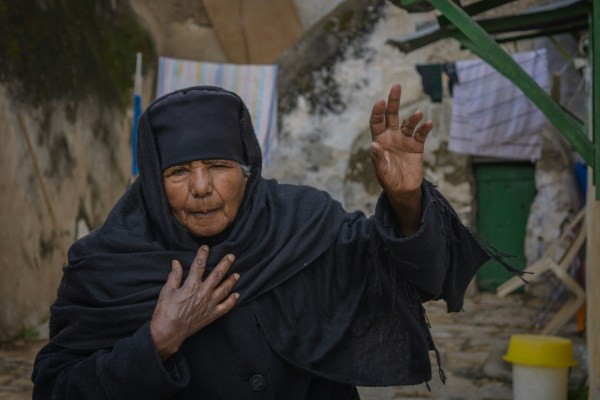
Photo by naaman frenkel on Unsplash
The Symbol of the Heart
Symbolism is the heart of Pope Francis’s teaching about the heart in Dilexit Nos.
The symbol of the heart has often been used to express the love of Jesus Christ. Some have questioned whether this symbol is still meaningful today. (DN 2)
People today question the meaningfulness of the heart because they question the importance of symbols. This is obvious from journalism’s daily use of “symbolic” to describe words and actions that make no real change to the state of affairs in the world. By the end of chapter one, however, Dilexit Nos will claim that the only way the world can change is if individuals and communities “return to the heart,” precisely as the organ of symbolism and the symbol of organic unity (DN 28–29). How and why does Francis reinvigorate the symbol of the heart so insistently?
The Symbol of the Whole
For Francis, the symbol of the heart epitomizes two fundamental liturgical concepts: sacramentality and communion.
The sacramentality of the heart consists in it being the part of the body that signifies the whole person. By coordinating the “fragments” of understanding, desire, intention, and action, the heart alone can effectively integrate one’s personal history and make life meaningful.
This profound core, present in every man and woman, is not that of the soul, but of the entire person in his or her unique psychosomatic identity. Everything finds its unity in the heart, which can be the dwelling place of love in all its spiritual, psychic, and even physical dimensions. In a word, if love reigns in our heart, we become, in a complete and luminous way, the persons we are meant to be, for every human being is created above all else for love. In the deepest fibre of our being, we were made to love and to be loved. (DN 21)
As the “dwelling place of love,” the heart is the organ of communion—communion of every kind and in every sense of the word.
How the Heart Thinks
Although communion does not begin with one’s own efforts at love, it may be described in the first instance as communion with oneself. This personal integrity is the effect of the heart’s symbolic reflection in contemplative, interior prayer. In a remarkable exegesis of Luke 2:19 and 2:51—containing one of the best definitions of symbol to appear in any papal document—Francis models the heart’s symbolic activity on the Blessed Mother’s inward “pondering” and “treasuring” of moments in her child’s life.
The best expression of how the heart thinks is found in the two passages in Saint Luke’s Gospel that speak to us of how Mary “treasured (synetérei) all these things and pondered (symbállousa) them in her heart” (cf. Lk 2:19 and 51). The Greek verb symbállein, “ponder,” evokes the image of putting two things together (“symbols”) in one’s mind and reflecting on them, in a dialogue with oneself. In Luke 2:51, the verb used is dietérei, which has the sense of “keep.” What Mary “kept” was not only her memory of what she had seen and heard, but also those aspects of it that she did not yet understand; these nonetheless remained present and alive in her memory, waiting to be “put together” in her heart. (DN 19)
Because of “how the heart thinks,” it is “capable of unifying and harmonizing our personal history, which may seem hopelessly fragmented” (DN 19). The struggle to make sense of ourselves is not uniquely modern, as anyone who has read Augustine’s Confessions can confirm. Still, there is a modern malaise for which Francis prescribes a “return to the heart” (DN 9–10). The late pope described the problem at greater length in his 2022 letter on liturgical formation, Desiderio Desideravi. “Modern people—not in all cultures to the same degree—have lost the capacity to engage with symbolic action.” The inheritance bequeathed by modern individualism and postmodern fragmentation is “an abstract spiritualism which contradicts human nature itself, for a human person is an incarnate spirit and therefore as such capable of symbolic action and of symbolic understanding” (DD 27–28).
Heartlessness
Both Desiderio Desideravi and Dilexit Nos turn to Romano Guardini for further diagnosis of our symbolic insensitivity and ineptitude. Francis shares profound admiration for Guardini with his immediate predecessor, Benedict XVI. There is already reason to believe that Leo XIV, the first Augustinian pope, is similarly influenced by this pioneer of liturgical renewal, whose interpretation of Augustine’s conversion focuses on the inward quest for self-knowledge and wholeness.
In Desiderio Desideravi, Francis shares Guardini’s assessment of “‘the first task of the work of liturgical formation: man must become once again capable of symbols’” (DD 44).
The task is not easy because modern man has become illiterate, no longer able to read symbols; it is almost as if their existence is not even suspected. This happens also with the symbol of our body. Our body is a symbol because it is an intimate union of soul and body; it is the visibility of the spiritual soul in the corporeal order; and in this consists human uniqueness, the specificity of the person irreducible to any other form of living being. Our openness to the transcendent, to God, is constitutive of us. Not to recognize this leads us inevitably not only to a not knowing of God but also to not knowing ourselves. (DD 44)
In Dilexit Nos, Francis adopts Guardini’s designation for the disease that enervates intimacy and estranges us from God and from ourselves: heartlessness. Guardini illustrates the terminal form of heartlessness with a character from Dostoevsky’s Demons, Nikolai Stavrogin. Despite his magnetic charisma, Stavrogin never truly draws close to anyone because he “has no heart.”
“For only the heart creates intimacy, true closeness between two persons. Only the heart is able to welcome and offer hospitality. Intimacy is the proper activity and the domain of the heart. Stavrogin is always infinitely distant, even from himself, because a man can enter into himself only with the heart, not with the mind. It is not in a man’s power to enter into his own interiority with the mind. Hence, if the heart is not alive, man remains a stranger to himself.”1 (DN 12)
I and Thou
Intimacy and identity both depend on the heart’s symbolizing activity, which puts “I” and “Thou” together in friendship. Human friendship helps constitute us as persons, but “only the Lord offers to treat each one of us as a ‘Thou always and forever’” (DN 25). Only in the secret dialogue of the heart with God can we put away all self-deception and false pretense. For this reason, “the heart is also the locus of sincerity” and “the part of us that is neither appearance nor illusion, but is instead authentic, real, entirely ‘who we are’” (DN 5).
By the same token, the symbolic realism of the heart “makes all authentic bonding possible, since a relationship not shaped by the heart is incapable of overcoming the fragmentation caused by individualism” (DN 17). As with the individual, society’s need for the heart becomes painfully evident in its absence. Francis cites the spread of wars between countries and partisan power struggles within them. He urges us to “see and listen to the elderly women—from both sides—who are at the mercy of these devastating conflicts,” exiled from their homes and mourning lost grandchildren. “To see these elderly women weep, and not feel that this is something intolerable, is a sign of a world that has grown heartless” (DN 22).
In the face of the world’s indifference to elderly women and their tears, why prioritize liturgical formation of the kind called for in Desiderio Desideravi? “To engage with symbolic action” and thereby “recover the capacity to live completely the liturgical action” was, according to Francis, “the objective of the Council’s reform” (DD 27). This sounds like an esoteric goal, compared to recovering the capacity to “weep with those who weep” (Rom 12:15; Sir 7:34). Yet a reinvigoration of liturgical symbolism appears insignificant only if we confuse significance with intellectual mastery.
Heart Speaks to Heart
Dilexit Nos insists that the symbols of Christian faith do not merely call for interpretation. The heart of Christ—“the symbol of the deepest and most personal source of his love for us” (DN 32)—seeks from us not only understanding, but affection, reverence, and obedience.
Before the heart of Jesus, living and present, our mind, enlightened by the Spirit, grows in the understanding of his words and our will is moved to put them into practice. This could easily remain on the level of a kind of self-reliant moralism. Hearing and tasting the Lord, and paying him due honor, however, is a matter of the heart. Only the heart is capable of setting our other powers and passions, and our entire person, in a stance of reverence and loving obedience before the Lord. (DN 27)
The heart is the organ of symbolism and the symbol of communion because it is the dwelling place of love. It is the place where knowledge becomes love, according to the testimony of great intellectuals like Bonaventure and John Henry Newman. Pope Francis invokes Newman’s famous motto, Cor ad cor loquitur, “since, beyond all our thoughts and ideas, the Lord saves us by speaking to our hearts from his Sacred Heart” (DN 26). Here, also, the sacrament of the Eucharist makes a rare but crucial appearance in Dilexit Nos. “It was in the Eucharist that Newman encountered the living heart of Jesus, capable of setting us free, giving meaning to each moment of our lives, and bestowing true peace” (DN 26). If the heart of Jesus is the symbol of his human and divine love for us, then the Eucharist that flows from his pierced heart is the sacrament that symbolizes (puts together) God’s loving gift and our loving response.
Turning to the Sacred Heart
Symbols have consequences. This remains true even if liturgical symbols and the symbol of the Sacred Heart seem inconsequential in a “suffering world” that “presses forward despite wars, socio-economic disparities and uses of technology that threaten our humanity” (DN 31). The late pope avoided self-absorbed devotionalism as much as self-reliant moralism. “Taking the heart seriously,” he writes, “has consequences for society as a whole” (DN 29). Francis will unpack those social consequences in chapter five of Dilexit Nos. Before we can work any “social miracle,” however, we must return to the heart. It is not a turn away from our neighbors, yet it remains a turn inward to where each heart encounters the Sacred Heart as “the unifying principle of all reality,” for Christ’s heart is all love (DN 31).
Let us turn, then, to the heart of Christ, that core of his being, which is a blazing furnace of divine and human love and the most sublime fulfillment to which humanity can aspire. There, in that heart, we truly come at last to know ourselves and we learn how to love. (DN 30)
- Romano Guardini, Religiöse Gestalten in Dostojewskijs Werk (Paderborn, 1989), pp. 236ff. ↩︎
Please leave a reply.