
by Adam M.L. Tice
My alma mater, Goshen College (GC), is a unique and amazing place. Over the weekend of November 14-16, Goshen’s Hymn Club hosted a hymn marathon. Yes, there is a college club devoted to hymns – they are, in fact, a chapter of The Hymn Society in the United States and Canada.
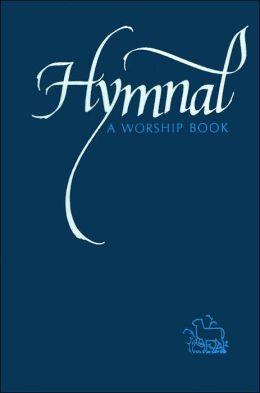 The marathon covered the entire contents of Hymnal: A Worship Book, the denominational hymnal of Mennonite Church USA. That’s 658 hymns in just over 30 hours. Students and community members joined as they were available, with five students participating the entire time. The event was a fund-raiser for Christian Peacemaker Teams. People attending were invited to donate, as were people who watched a live-stream online. I joined at four different points through the weekend, tallying 88 hymns. I was delighted to be invited to lead several times; at one point, I directed 24 in a row.
There was only one hymn sung out-of-order in the marathon – a piece often known simply by its number, 118 – and even sometimes called 606 by those still devoted to the previous hymnal, which was published ten years before I was born. This polyphonic setting of the Doxology is something of an anthem for American Mennonites, and it was saved for the conclusion of the sing, which came just after 1 a.m. on Sunday morning. A friend took this cell-phone video.
The five singers that persevered through the entire event stood at the center as the rest of us gathered around them to sing. Note that many people did not need their books to sing the interweaving parts.
(And see how this hymn is sung at college soccer matches when 6:06 remains in the second half!)
Congregational song – and generally, four-part a cappella hymnody – is part of life at Goshen College. Since the nineteenth-century transition from unison singing in worship this was the standard for music in the Mennonite communities descended from Swiss and German immigrants – the groups that form the cultural heritage for Goshen.
This singing style is sometimes dismissed as a cultural relic that is no longer relevant; or worse, as an impediment to evangelism, because it is difficult for outsiders to assimilate into this way of singing. Many Mennonite churches are abandoning the tradition for these reasons. It is worth noting, however, that the founder of the GC Hymn Club, Bobby Switzer, comes from a non-Mennonite religious background. In various youth groups, he mostly sang “praise and worship” style music. He first encountered Mennonite hymn singing in high school.
I come from a similar background, only becoming immersed in hymnody as a college student. This way of singing does not depend on ethnicity or exposure from birth.
 I worry that those who would set aside a cappella harmony do not recognize the theological and ecclesiological value of the practice. It developed as an expression of our communal faith, and it helps to form and sustain our communities. It is a “sacramental” experience as singing enacts our physical and spiritual participation in the body of Christ. While anyone can sing a melody alone, it takes four people with varied voices to form a complete hymn. This provides a rich image of our understanding of the church.
The experience of singing straight through sections of the hymnal – and the experience of leading – led me to some new thoughts about both the book and the community.
I have been using this particular hymnal for sixteen years now. I studied it extensively as a college and seminary student, and have planned and led from it as a pastor and musician. Even so, there are a surprising number of hymns that I have never sung. During the sing I was essentially handed a pitch-pipe and asked to take over leading for awhile. There was no rehearsal, and really no time to learn or teach new pieces – we just had to dive in. Fortunately there was usually a pianist on hand to play along with unfamiliar pieces.
Imagine leading a well loved, familiar hymn, and then turning the page to discover something completely unknown. The results were typically messy for a stanza or two, but as the singers found their footing and learned the harmony, we could generally sing with some confidence by the end of the hymn.
This prompted me to reflect on how some hymns become beloved favorites, while some fall by the wayside. There are several explanations, musical, cultural, and theological.
One broad category of unfamiliar hymns was a result of the formation process of our hymnal. It was a collaborative effort at the time between three denominations – two Mennonite groups that later merged to form our current denomination, along with the Church of the Brethren. There is a substantial body of Brethren hymnody in the hymnal which has never caught on with Mennonites. It represents a somewhat more pietistic theology and way of singing in keeping with their background. Mennonites, if I may make a gross generalization, favor a somewhat more exuberant musical mode of expression which, perhaps, reflects our emphasis on living out our faith.
Add to those a body of tunes written in the mid-to-late twentieth-century that owe their musical inspiration more to art music than to communal singing traditions. They often feature difficult tonalities and mixed meters that are rather more interesting than they are inspiring.
Some hymns are largely ignored because of theology or language that no longer reflects our lived reality. We may recall the music with affection, but wince at the words.
A few “praise and worship” style pieces in the hymnal represent what was available in the late eighties – in several cases, these have not worn well, and feel very dated. (Keep in mind that the collection was published before current college students were born.)
An interesting category of neglected song are those which we don’t often have occasion to sing. Hymns for evening, weddings, and foot washing, for example, are rarely put into practice. We have a remarkably rich section of communion hymns. In seminary I studied the impact of hymnals on Mennonite eucharistic theology (published in The Conrad Grebel Review) and was struck by the vitality and breadth of this section. But for congregations that only practice communion a few times a year (lamentably so, in my view) there is simply not enough opportunity to cultivate a substantial set of familiar hymns.
Despite those brushes with the unfamiliar, most of the hymnal was fairly accessible. I would venture that the average hymn-singing Mennonite congregation has a fairly large repertoire of hymns forming their canons. (In addition to the hard-bound hymnal, many churches also make use of two hymnal supplements published within the last ten years.) Some pieces, even if unfamiliar, could be comfortably sight-read by people accustomed to the style.  Gospel songs of the late nineteenth-century with only three to four notes in the bass lines are particularly easy to pick up. Musical simplicity, while advantageous for initial learning, is certainly not a prerequisite for becoming a well-loved hymn. The group sang Bach’s harmonization of CHRIST LAG IN TODESBANDEN with nearly equal confidence as the Taizé “Eat this bread,” which is on the facing page. Well-sung hymns ran the gamut of style, origin, and era.
I offer this glimpse into a rather quirky Mennonite event to prompt a number of questions.
- How does a community’s hymnal shape it – both theologically and sociologically?
- How does the style of singing impact and reflect a church’s identity?
- How does a church develop its canon within the canon – those pieces that become well-loved and regularly sung? What is neglected in that process?
Pray Tell reader Adam M L. Tice is a widely-published writer of hymn texts, pastor, and musician.
Please leave a reply.