
Re-Reading Sacrosanctum Concilium: Article 73

Vatican website translation:

73. “Extreme unction,” which may also and more fittingly be called “anointing of the sick,” is not a sacrament for those only who are at the point of death. Hence, as soon as any one of the faithful begins to be in danger of death from sickness or old age, the fitting time for him to receive this sacrament has certainly already arrived.

Latin text:

73. “Extrema Unctio”, quae etiam et melius “Unctio infirmorum” vocari potest, non est Sacramentum eorum tantum qui in extremo vitae discrimine versantur. Proinde tempus opportunum eam recipiendi iam certe habetur cum fidelis incipit esse in periculo mortis propter infirmitatem vel senium.

Slavishly literal translation:

73. โ€œThe Last Anointing,โ€ which could also and better be called โ€œAnointing of the Sick,โ€ is not a Sacrament only for those who are turned toward the final stage of life. Indeed the opportune time for receiving it has certainly been met when [one of the] faithful begins to be in danger of death on account of infirmity or old age.

Just as historical studies uncovered a variety of celebrational structures and rituals to celebrate the sacrament of penance/reconciliation, so they brought to light changes in the practice and theology of the sacrament of the sick. The term โ€œExtreme Unctionโ€ applied to this sacrament suggests that it is primarily a sacrament for the dying; indeed some medieval theologians suggested that the proper candidate for the sacrament should be one in final agony, preferably insensate, so that the primary effect of the sacrament would be to ensure that the dying person would enter heaven with minimal experience of purgatory. The Council Fathers sought to shift the focus of this sacrament from ministry to the dying (since viaticum is more properly considered the sacrament of the dying) to ministry to the ill, signaled by a change in its title: โ€œthe Anointing of the Sick.โ€ They further stated that the proper candidate for the sacrament would be a baptized person who was seriously ill or so old that death could be foreseen as a not unlikely result of the process that the person was experiencing.

Pray Tell readers may wish to discuss: 1) how effectively this shift in terminology has taken root among the faithful; 2) how widespread among the faithful is the sense that sacramental anointing is intended for the seriously ill and not (only) for the dying; 3) what pastoral wisdom has accumulated about the proper candidates for the sacrament since the Council.
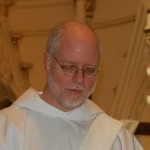
Michael Joncas

Ordained in 1980 as a priest of the Archdiocese of St. Paul-Minneapolis, MN, Fr. (Jan) Michael Joncas holds degrees in English from the (then) College of St. Thomas in St. Paul, MN, and in liturgical studies from the University of Notre Dame, Notre Dame, IN and the Pontificio Istituto Liturgico of the Ateneo S. Anselmo in Rome. He has served as a parochial vicar, a campus minister, and a parochial administrator (pastor). He is the author of six books and more than two hundred fifty articles and reviews in journals such as Worship, Ecclesia Orans, and Questions Liturgiques. He has composed and arranged more than 300 pieces of liturgical music. He has recently retired as a faculty member in the Theology and Catholic Studies departments and as Artist in Residence and Research Fellow in Catholic Studies at the University of St. Thomas, St. Paul, Minnesota.

Please leave a reply.

Comments

8 responses to “Re-Reading Sacrosanctum Concilium: Article 73”

  1. Scott Pluff

    Last year my parish offered Anointing at all Masses on a certain weekend. On Saturday, our middle-aged pastor explained in his homily that the sacrament was not just for the dying, but all persons who are sick in mind, body, or spirit. Roughly 50 people came forward to be anointed. On Sunday, our newly-ordained associate explained that the sacrament is reserved for those with serious illnesses, perhaps even terminal illnesses, and for those about to undergo major surgery. Zero people came forward to be anointed. I suppose according to his view, if you were able to walk down the aisle for anointing you wouldn’t qualify anyway.

    There are definitely different theologies operating out there.

    1. Karl Liam Saur

      @Scott Pluff – comment #1:
      Well, the associate was taking his cue from canon law, while your pastor was taking his cue from the ritual book, I suspect:

      http://catholicsensibility.wordpress.com/2008/09/29/pcs-8-12-recipients-of-the-anointing-of-the-sick/

  2. Terri Miyamoto

    I think that parish celebrations of Anointing of the Sick, which we do regularly, along with careful teaching, has definitely changed the perception that this sacrament is reserved for the dying. Our parishioners request and receive anointing as a matter of course when they go into the hospital, are facing surgery or chemotherapy and such, or have a health crisis. Many chronically ill, and the parents of disabled or ill children, get much comfort from the anointing.

    Although the definition of “seriously” ill may vary (as Scott points out above), it seems to me that we don’t hurt anybody by being stingy with the sacrament.

  3. Ann Olivier

    When you’re very old like me and in my not very good state of health you can pop off any time without surprising anyone — and die without the Sacrament. Maybe that should be the criterion for the very old: would the sudden death of this person at this age and in this state of health be a surprise? I think such people should be eligible for anointing even though the judgment is bound to be rather subjective.

    1. Fritz Bauerschmidt Avatar

      @Ann Olivier – comment #3:
      Ann, I think “advanced age” is explicitly mentioned as a reason for receiving the sacrament.

      1. Ann Olivier

        @Fritz Bauerschmidt – comment #5:
        Thanks, but that isn’t the usual interpretation is it? “begins to be in danger of death because of infirmity or old age” seems to imply that the aged person is somehow in perceptible danger, which isn’t the case with many of us. But I admit that the text can be seen as ambiguous.

  4. Fr. Neil Xavier O'Donoghue

    I suppose who can receive it depends on how you define “infirm.” If it is a sacrament for the sick, the Latin “infirmus” translates as “weak” or “feeble.” Its the opposite of “firm.” I think we need to strike a balance, there is another sacrament that deals with the spiritually infirm, its called the Sacrament of Penance, so I would be against an indiscriminate anointing of the whole congregation. On the other hand, if someone is enfeebled by old age or sickness they should receive it. I agree with Terri, that its always better not to be stingy with the sacraments. But if someone dies suddenly and they don’t receive this sacrament, its not such a big deal. Our renewed understanding is that this is a sacrament to help us face illness and eventually to prepare for death. But if death catches us unawares, then so be it. What is important is to live each day as if it was our last and to entrust ourselves to the mercy of God, as we do at the penitential rite of the Eucharist or in Compline of the Divine Office.
    But getting back to the Constitution itself, I think it is another example of where there has been some development in the years following the Council. It is still an area of some contention, but generally I think we can see a more generous use of the Sacrament, in line more with the scriptural mandate of James 5, than with the medieval theologies of the anointing as a preparation and consecration for a Christian death.

  5. Terri Miyamoto

    Re-reading what I wrote — I left out a “not”

    What I meant was:
    We don’t hurt anybody by NOT being stingy with the sacrament.

    And my editor friends would probably be happier if I fixed the double negative and said:
    We don’t hurt anyone by being GENEROUS with the sacrament.

    Yikes.


by

Tags:

Discover more from Home

Subscribe now to keep reading and get access to the full archive.

Continue reading